Key Considerations Behind Effective SEN Playground Design
Breaktimes are often where challenges become most visible for SEN pupils, with uneven engagement, pressure around movement and an increased demand in supervision. Where outdoor environments are well designed, pupils engage more readily, regulate more effectively, and return to learning more easily.
Designing spaces that genuinely support these outcomes goes beyond the installation of relevant play equipment. Pupil behaviour at breaktime is determined by how the space is structured, experienced and understood.
And critically, on the expertise behind how those elements are brought together as a complete playground.
Led by Creative Play’s Outdoor Play Expert Simon and Product Design Manager Amy, the following outlines the key considerations behind effective SEN playground design. Their approach is informed by ongoing collaboration with a specialist SEN school in Manchester, grounded in how outdoor environments support engagement, regulation and independence in practice.
Gain insight on:
- Why behaviour patterns often reflect environment rather than pupil intent
- What schools typically reassess when reviewing outdoor provision
- How the layout of a playground influences levels of participation
- How independent play develops from clarity, choice and control
- Where pressure points tend to occur, and how design can help
“It has changed our playtimes for the better on so many levels, supporting sensory needs, communication and social interaction”
– Maple Grove Special Education Needs School
Structured Transitions: Supporting Regulation For Calmer Starts
For many pupils with SEN, transitions between indoor and outdoor spaces are often the most sensitive points of the school day. Some pupils may present as well regulated in the classroom but respond differently in a louder, less structured setting.
“This is commonly observed as pupils cluster at exits and move unevenly through doorways, with a noticeable drop in regulation within the first few minutes of break,” says Outdoor Play Expert Simon. In some schools, this results in staff managing flow at key entry points, “suggesting that movement through the space is not fully supported by the wider layout at this stage.”
“Effective SEN playground design considers entry and exit points, movement pathways and spatial flow as part of how transitions are structured, rather than as separate elements,” explains Product Design Manager Amy.
“Where this is in place, pupils typically engage more quickly at the start of break,” she adds, “with reduced need for adult intervention.”
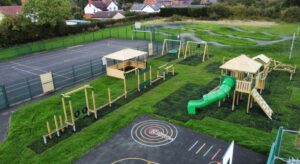
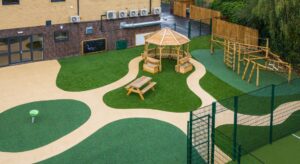
In practice, this is reflected in how the playground is configured as a single, legible world rather than a collection of separate play areas. Circulation is shaped so that movement naturally distributes across the space, with clear entry points and identifiable routes supporting predictable flow at the start of break.
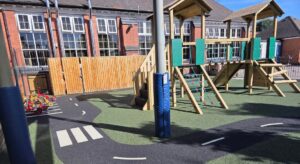
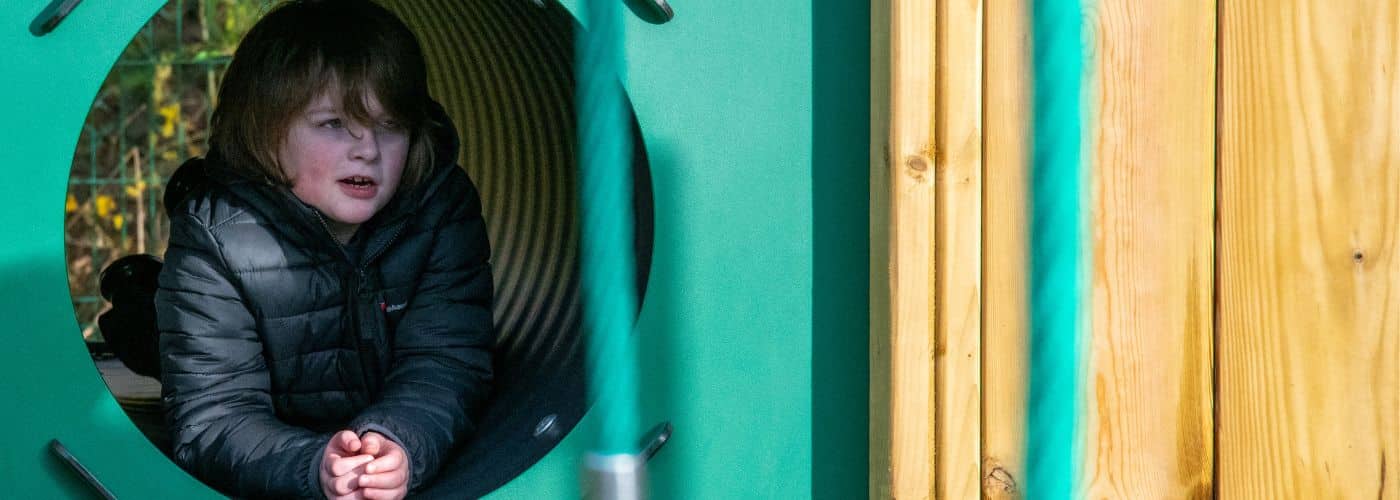
A Cambridge Tunnel is an excellent example of a transition corridor between an active play area and a quieter sensory zone. Filtered light, colour and partial enclosure create a structured passage in sensory experience, supporting pupils as they move between environments with different types of stimulation.
Adding seating allows pupils to pause and regulate within the corridor itself, while the structure also naturally channels movement between areas, helping reduce congestion and supporting a more even flow of pupils across the playground. This is particularly important at the start of break, where unmanaged entry points often contribute to clustering and increased supervision pressure.
“Activity zones are then positioned to work in relation to this movement,” says Simon, “allowing high-energy, structured and quieter forms of play to coexist without competing for attention or supervision focus.”
Case Study: Prospect House SEN School Zone 2
Inspiration: SEN Outdoor Play Equipment
Clear & Accessible Layouts: Improving Engagement Across the Playground
“In many SEN school playgrounds,” explains Outdoor Play Expert Simon, “pupils are present in the space but not actively engaged, often edging around activities, moving between zones without settling, or waiting for adult prompting before beginning play.”
During busy break periods, pupils often cluster in areas that are more clearly understood or socially established, while other parts of the playground remain underused, even where equipment is available.
“This pattern is not typically linked to willingness to engage, but to how clearly the environment communicates what is possible within it.”
Where clarity is limited, engagement at the start of break often depends on adult direction or peer initiation, particularly for pupils who are less confident entering group activity. As a result, participation can vary depending on staffing presence and peer dynamics.
“In environments that are clearly structured,” says Amy, “pupils are more likely to begin play independently without prompting. Consistent layouts, clear zoning and visibly defined activity areas all support pupils in identifying where different types of play naturally take place.”
This is less about play equipment and more about positioning. A MUGA, for instance, provides an immediately recognisable space for group play, with clear boundaries and a visible purpose that reduces uncertainty at the point of entry. When positioned alongside other clearly defined areas, such as movement-based features (traverse walls) or quieter zones (activity panels), pupils can identify different types of play at a glance.
As a result, participation becomes more evenly distributed across the space, with fewer concentrations of activity forming around a small number of zones during peak break periods.
Case Study: Essex Primary School
Explore: How SEND Playground Design Prepares Pupils For The Future
To Understand How Your Current Playground Layout May Be Impacting Engagement And Regulation
Sensory Design: Supporting Regulation Across the Day
Breaktimes bring together high levels of noise, movement and social interaction, creating varying sensory demands across different areas of the playground.
“Where sensory environments are less structured, pupils often move without a clear way of modulating exposure to sound, density or activity, increasing the likelihood of overstimulation or withdrawal,” explains Simon. “Disengagement in these instances can act as a form of self-regulation, reducing overall participation in breaktime activity.”
Intentionally structured settings distribute sensory load more evenly across the space. Pupils are more likely to shift between high-energy, moderate and low-stimulation areas depending on need, allowing regulation to take place through movement within the playground rather than exit from it.
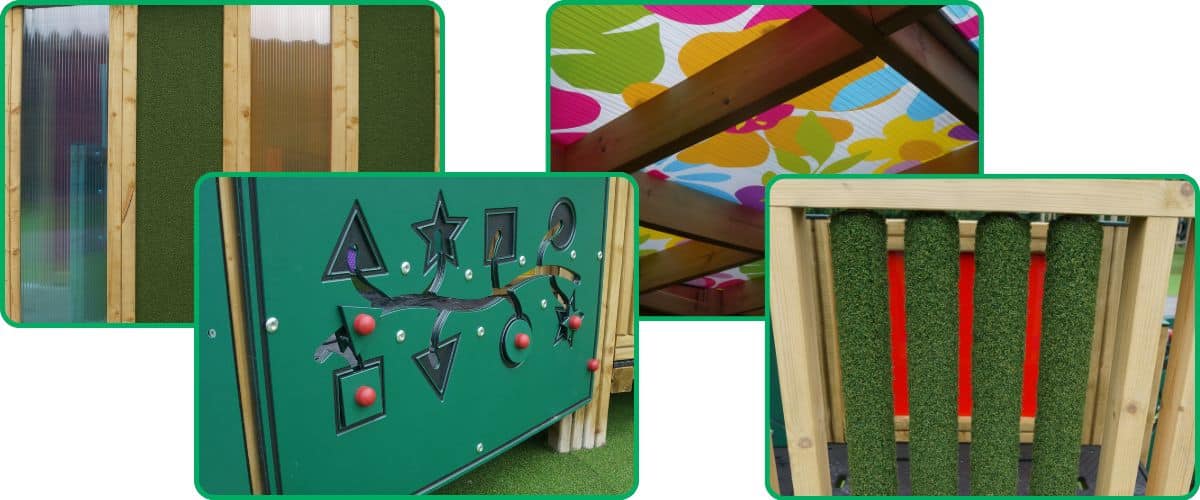
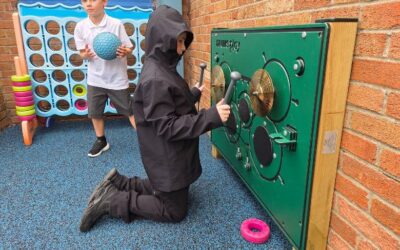
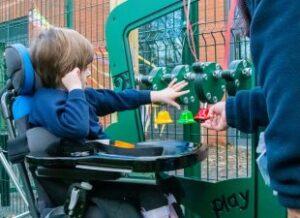
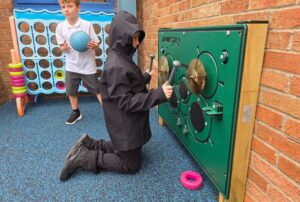
For example, a mound tunnel can provide a more enclosed, lower-intensity space within a busier area, while a group of sensory panels offers a focused point of engagement with reduced social demand. Nearby seating positioned beneath a play tower allows pupils to remain within the environment while stepping back from activity. Together, these elements create a gradient of sensory experience, enabling pupils to adjust their level of engagement without leaving the space entirely.
“This creates a balanced sensory environment where differing needs are accommodated within a single space, and engagement is less disrupted by overload.”
Case Study: St Mary’s Catholic Primary School
Read: Playground Planning For Long-Term Success
Built-In Choice: Supporting Independent Play Engagement
For many pupils with SEN, engagement becomes more consistent when they can make clear choices about how they participate in play, supporting more independent interaction with the environment, including the level of physical challenge or risk they want to take.
This is often observed when pupils explore play equipment at their own pace, repeat preferred activities, or engage alongside others. Play becomes self-directed as they choose when to start, how long to stay engaged, and how far to progress.
“Effective playground design supports this by providing choice built into the structure of play, rather than requiring external direction to initiate participation,” says Product Design Manager Amy.
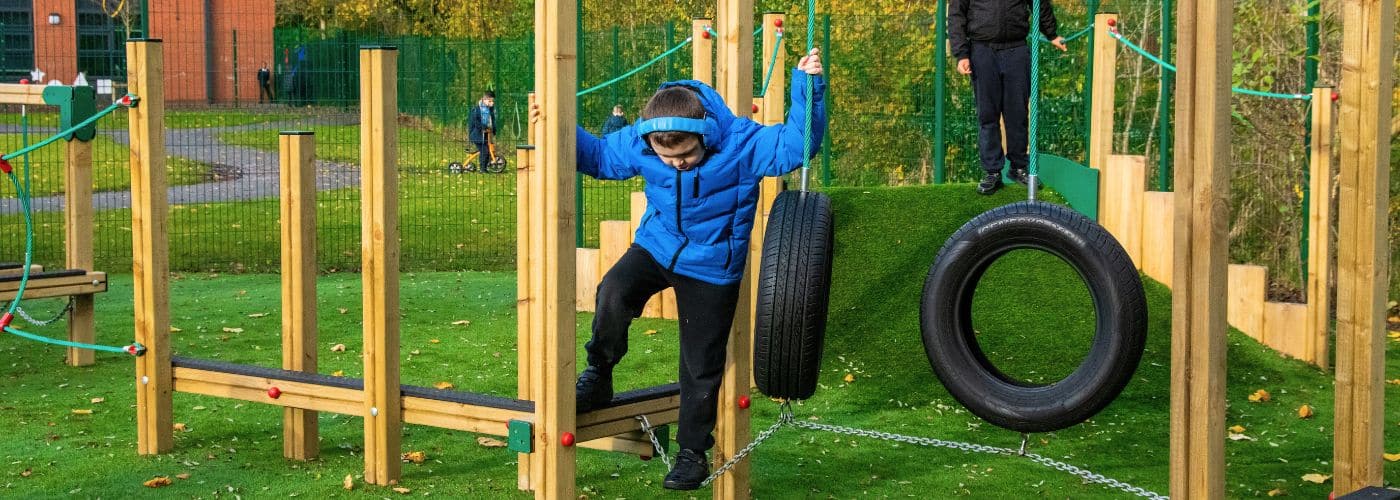
Trim trails support this well, offering a range of movement-based challenges that can be accessed without following a fixed sequence. Pupils can enter at different points, repeat preferred elements, or move on without completing the full route, allowing them to choose the level of difficulty they are comfortable with.
This creates an environment where pupils engage more independently, “shaping their own experience within a safe and coherent setting rather than following a prescribed way of playing.”
Case Study: South Harringay School
Discover: More Benefits Of School Playground Equipment

Physical Development: Supporting Confidence-Building Movement
Physical ability and confidence vary widely across pupils, becoming most visible during unstructured play time when activities are self-selected.
“In some settings, this results in pupils repeatedly using familiar equipment while avoiding areas that require higher levels of coordination, strength or balance,” says Simon. “Over time, this can limit opportunities to develop movement skills, particularly for those who are less physically confident.”
Where playgrounds offer only a narrow range of challenge, progression is difficult to achieve. Pupils either remain within a small set of comfortable activities or disengage from more demanding forms of play altogether.
“More effective environments provide multiple routes into movement, allowing pupils to engage at an appropriate level and build confidence over time,” says Amy. “Progressive challenges support gradual skill development, enabling pupils to extend balance, coordination and strength through repeated use rather than one-off participation.”
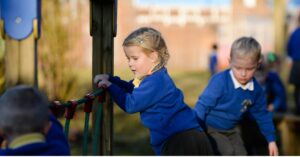
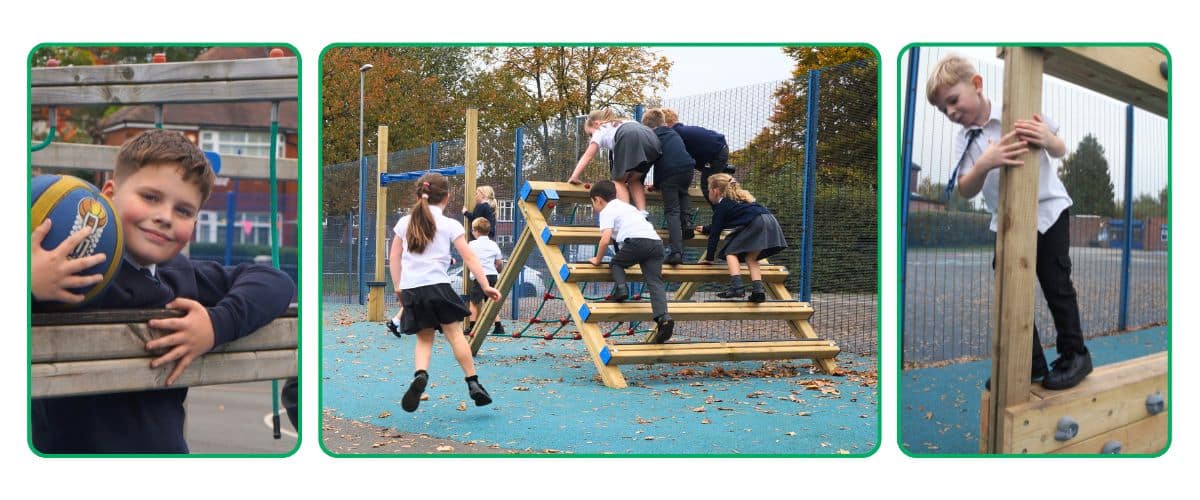
Elements such as balance beams, stepping logs and low-level traverse features provide different entry points into movement, allowing pupils to engage at a level that matches their confidence. Some may focus on basic balance and stepping, while others progress to more complex coordination and sequencing.
For pupils with SEN, returning to familiar movements and extending them over time supports confidence building, alongside development of coordination, balance and spatial awareness through repeated, self-selected engagement.
This allows pupils to develop movement skills within a shared environment, with progression shaped by individual ability rather than restricted by the design of the space.
Case Study: Prospect House SEN School Zone 1
Crucial Play Equipment: Developing The 3 Fundamental Movement Skills
To Understand How Your Current Playground Layout May Be Impacting Engagement And Regulation
Shared Spaces: Supporting Different Ways of Playing Together
In SEN playgrounds, pupils rarely engage with the same environment in the same way, even when using the same equipment at the same time. “Differences in physical ability, sensory profile and confidence mean that a single space is often experienced in multiple ways simultaneously,” explains Simon.
Where environments are less considered, this can lead to unintended segregation, with certain pupils gravitating towards specific areas while others avoid them altogether. Over time, this reduces shared use of the playground and limits opportunities for peer interaction across different abilities.
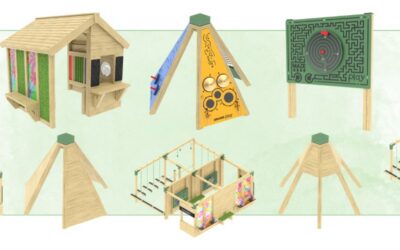
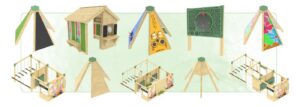
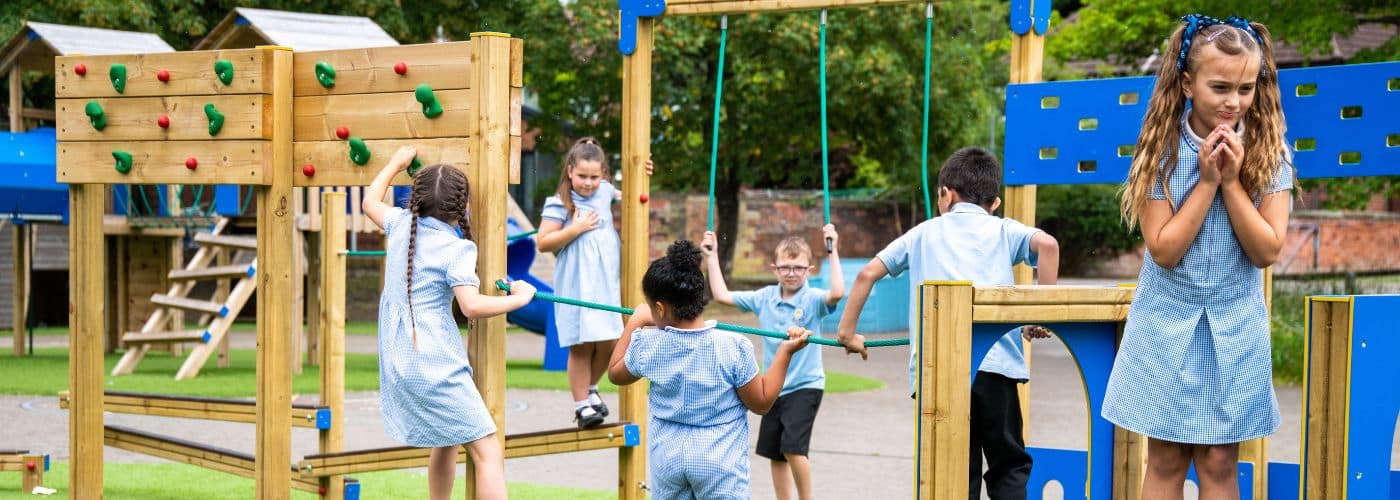
Jigsaw Play Towers perfectly illustrate how shared space can support different forms of use at the same time. Some pupils follow defined routes through the structure, moving from entry point to exit, while others explore more freely, repeat preferred elements, or use features such as panels and lookout points for imaginative play. This enables varied levels of movement, challenge and interaction within a single, inclusive environment.
“This creates a shared environment where pupils are present together, but able to use the space in ways that reflect their individual needs and capabilities,” suggests Amy, “supporting inclusion through design rather than separation of provision.”
Case Study: Blossom House School
Tips: Designing An Inclusive Playground
Conclusion
“SEN playground design works most effectively when it is considered as a complete system rather than a collection of separate features,” says Outdoor Play Expert Simon. “How space is structured directly shapes how pupils move, engage, regulate and participate throughout the school day.”
“Across well-designed environments,” concurs Product Design Manager Amy, “these factors work together to support more consistent engagement, more stable regulation, and greater opportunities for independent and inclusive play.”
Where this alignment is not yet present, the most useful starting point is often a closer look at how the space currently performs during key moments of the day, particularly transitions, peak activity periods and higher sensory demand.
These patterns often reveal where design is shaping behaviour in unintended ways, and where small changes to layout or structure could improve consistency for both pupils and staff.
This often includes assessing how movement flows through the space, how consistently different areas are used, where supervision demand is highest, and how effectively the environment supports regulation across different parts of the day.
For schools reviewing provision, a focused evaluation of how the space is currently being used can be the first step towards identifying practical, targeted improvements.
To Review And Improve Your SEN Playground Provision
Further Reading
HSE – Children’s Play And Leisure Environments
Play England – Design For Play
Learning Through Landscapes – School Grounds Guidance
OPAL – Whole School Play Strategy
Sensory Trust – Inclusive Design
National Autistic Society – Sensory Differences
Explore More Playground Insights:
WATCH: The Incredible Technology Making New Timber SEN Playground Equipment Possible
WATCH: Children From Maple Grove Special Education School Tour Playground Factory
The 7 Areas Of Learning And Development Aided By Outdoor Play Equipment
Understanding Playground BS EN Safety Standards
How To Create A Sustainable School Playground