

Making & Breaking Rules: MUGAs and Adventure Trails
Two practical playground choices for supporting physical activity, focus and behaviour
Schools face increasing pressure to make outdoor spaces work harder, support physical development, improve behaviour and demonstrate clear value over time. Multi-Use Games Areas (MUGAs) and Adventure Trails are two proven outdoor play solutions that consistently deliver across all three.
Used independently or together, these popular items introduce structure, movement and purpose into the playground, creating environments where children can be active, regulated and engaged throughout the school day.
MUGAs: Structured sport, flexible use
While free-flow movement supports regulation, structured outdoor play activities deliver a complementary role by introducing rules, boundaries and shared goals. This balance between freedom and structure reflects widely adopted behaviour frameworks used in schools, where predictable environments and clear expectations underpin positive conduct.
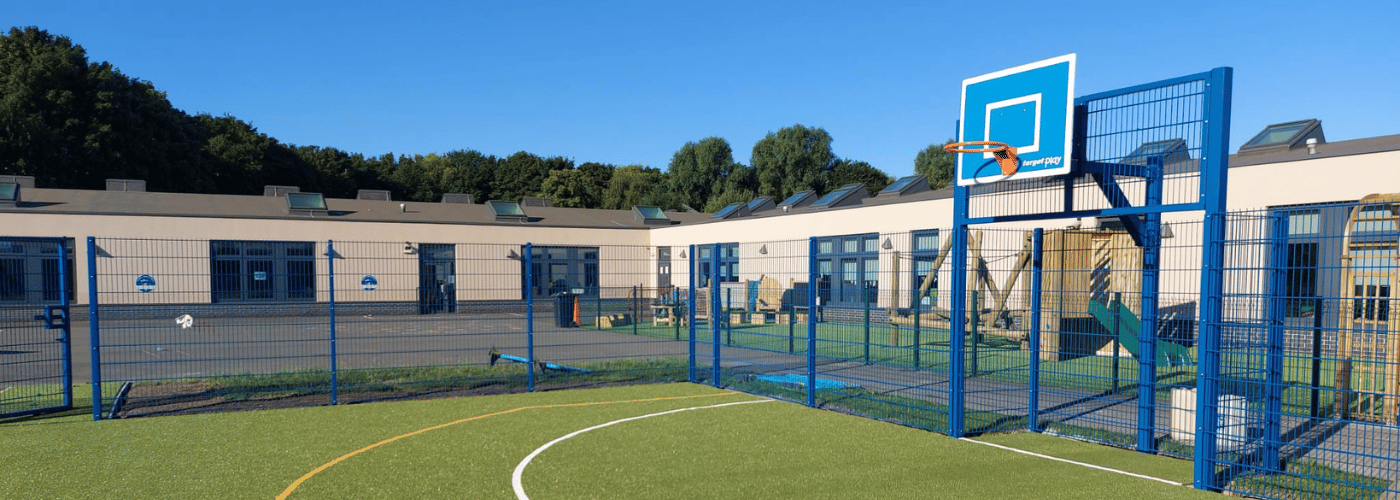
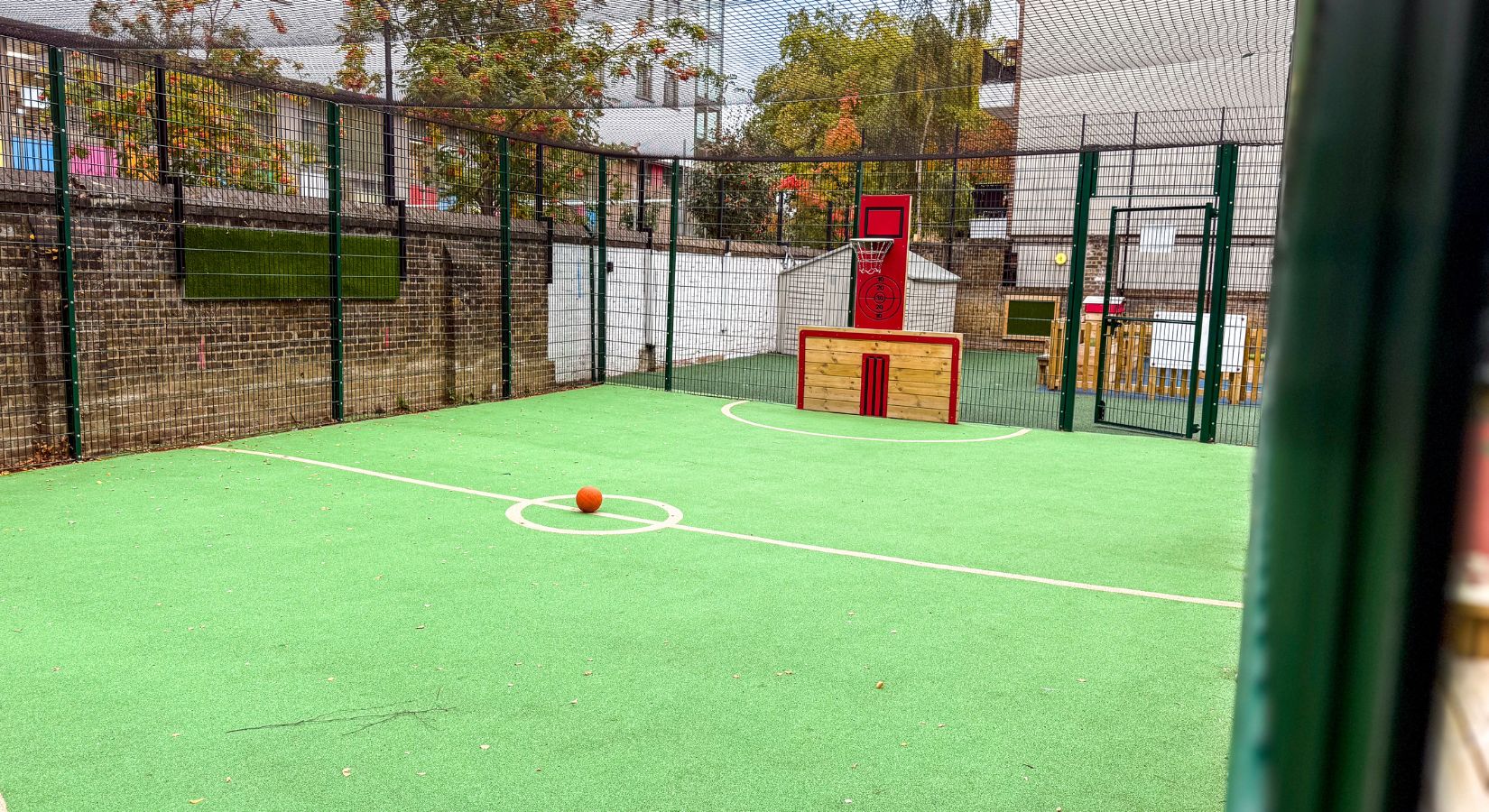
Multi-Use Games Areas (MUGAs) align strongly with curriculum delivery, particularly within PE, by providing a consistent and purpose-built environment for skill development, cooperation and application of rules.
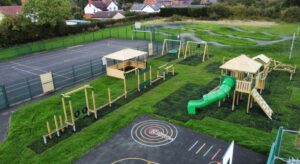
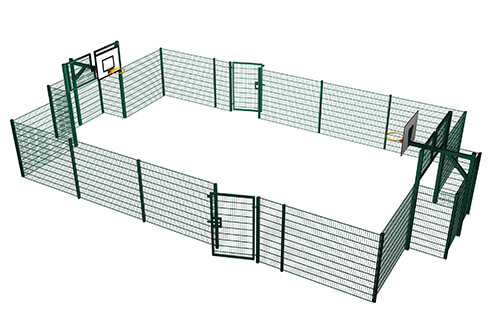
Designed to accommodate multiple activities, MUGAs provide schools with a defined, durable space for sport and physical education which supports both curriculum and active play.
Supporting PE and daily activity
There is a well-established link between structured physical activity and improvements in attention, mood and social behaviour. MUGAs provide a consistent environment where expectations are clear and activities are predictable, which can be particularly beneficial for children who respond well to routine.
Within a MUGA, children experience:
- Clear boundaries – both physical and behavioural, which can reduce disputes
- Rule-based play – encouraging turn-taking, cooperation and self-control
- Shared objectives – supporting teamwork and positive peer interaction
- Opportunities for success – through a wide range of sports and ability levels
Because MUGAs are suitable for both PE lessons and unstructured playtimes, they reinforce the link between physical exertion, emotional regulation and learning readiness throughout the school day. This continuity supports curriculum goals by enabling schools to deliver PE objectives more effectively while also improving behaviour, focus and engagement across other subjects.
Durability, performance and long-term value
MUGAs and Adventure Trails are typically selected not just for their immediate impact, but for their long-term ability to provide:
- Reliable access to movement day after day
- Predictable environments that children can become familiar with
- Reduced disruption to routines through low maintenance
Both are excellent long-term investments offering:
- High durability to withstand daily use
- Consistent performance across seasons
- Low maintenance requirements
- Strong value over time compared to short-life solutions
For schools balancing budgets with long-term planning, this playground type provides clear, measurable returns in activity levels, behaviour outcomes and use of space.
CASE STUDY: Not limited to schools with excessive outdoor space, see how this urban SEN school in London comfortably incorporated a MUGA into its outdoor play area
Want to discuss your school playground needs?
Adventure Trails: Movement, flow and challenge
From a behaviour and wellbeing perspective, Adventure Trails align closely with established thinking around self-regulation, sensory processing and purposeful movement. Many schools now recognise that movement plays a direct role in supporting attention, emotional regulation and readiness to learn – particularly for children who find it difficult to regulate behavioural responses.
Adventure Trails easily support approaches commonly used within whole-school behaviour, including movement breaks, sensory regulation strategies and graduated physical challenges – principles widely used within SEND practice and inclusive classroom management.
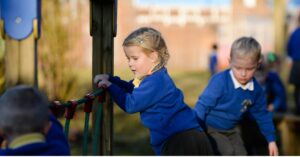
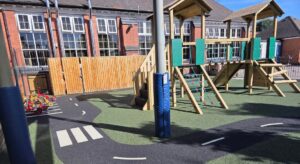
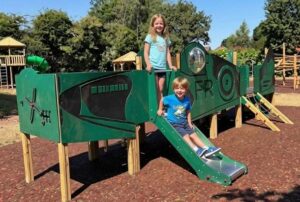
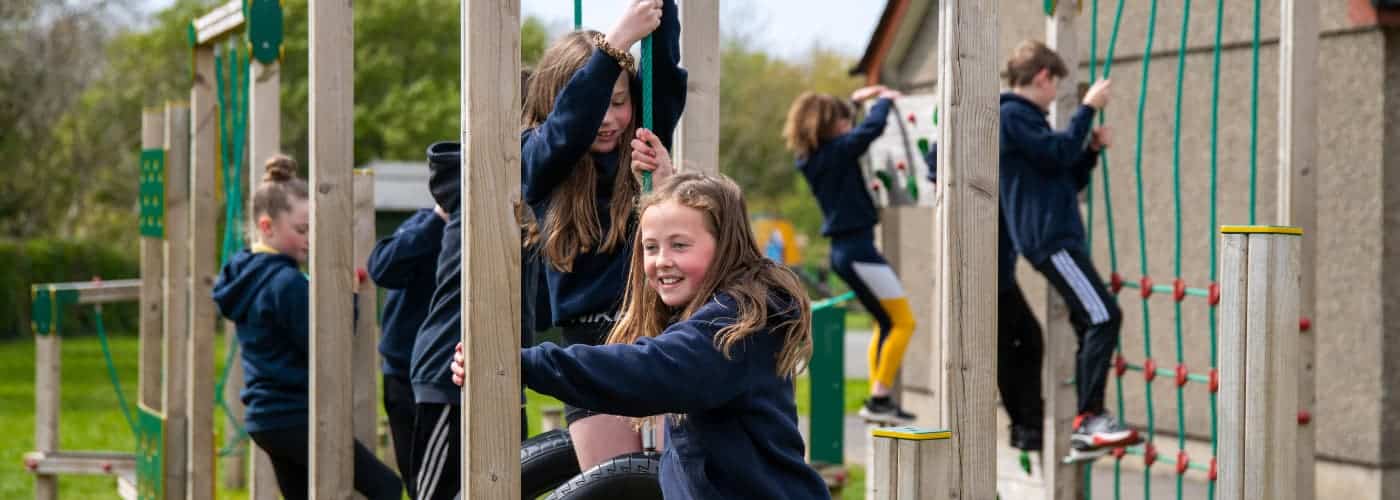
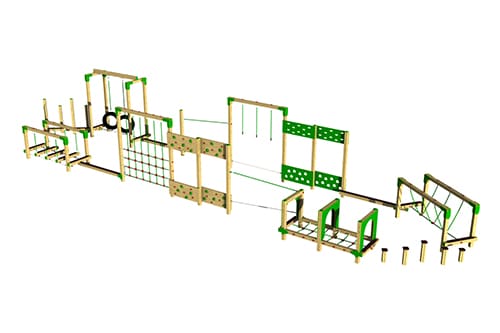
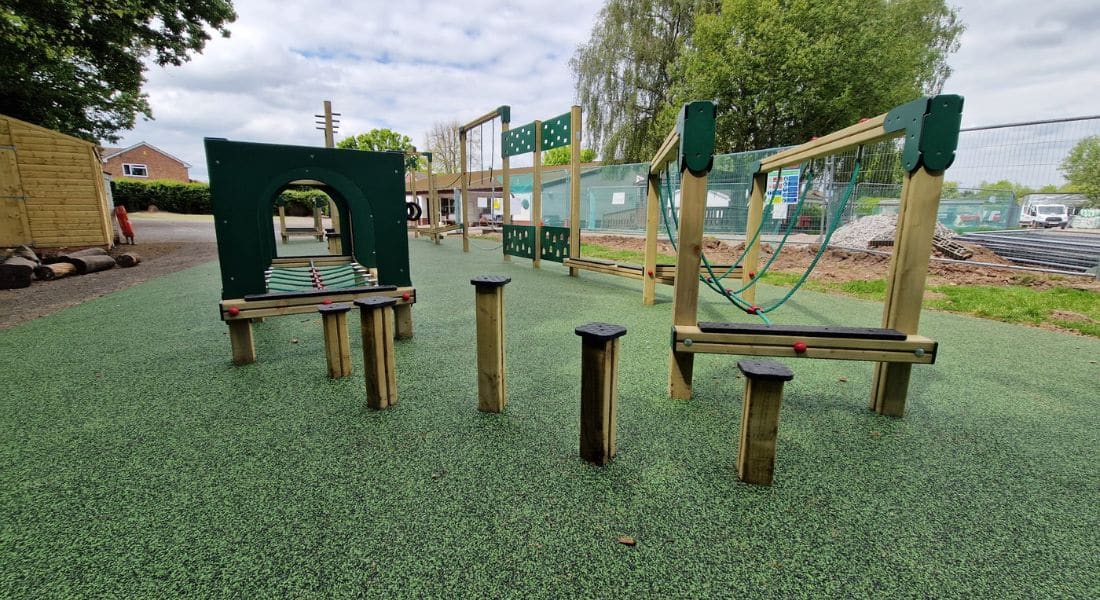
The route-based nature of this outdoor play equipment encourages children to move with intent. By linking a series of physical challenges related to balancing, climbing, stepping, hanging and jumping, a purposeful journey through the playground is created, rather than a single destination.
This sense of flow is particularly valuable in busy school environments. Children can join and leave the trail at different points where they feel most comfortable, while keeping movement continuous, and reducing bottlenecks, which can lead to conflict.
Supporting physical activity and behaviour regulation
Extended periods of sitting or low-stimulation activity can make regulation difficult for many children. Movement-based play allows children to discharge excess energy, reset their sensory systems, and gently stimulate alertness when focus is low.
Adventure Trails support this through:
- Rhythmic, sequential movement – stepping, balancing and traversing elements in a sequential order provides predictable patterns that can be calming and organising
- Proprioceptive input – climbing, hanging and balancing activities engage muscles and joints, which is widely associated with improved body awareness and emotional regulation
- Self-paced challenge – children choose how quickly and how far to engage, supporting autonomy and reducing pressure
- Clear physical purpose – having a defined route or task can reduce aimless movement that sometimes leads to conflict
In practice, this often translates to calmer transitions back into the classroom, improved readiness to learn, and fewer behaviour issues driven by restlessness or frustration.
From a curriculum perspective, these outcomes directly support learning. Children who are better regulated are more able to listen, follow instructions, engage with tasks and sustain attention, making Adventure Trails a practical extension of classroom-based behaviour strategies, rather than a separate play provision.
Need help working out the best outdoor play equipment for your school?
Designed to fit your space
A further strength lies in its adaptability, with a variety of Adventure Trail layouts to suit available space, site constraints and desired outcomes.
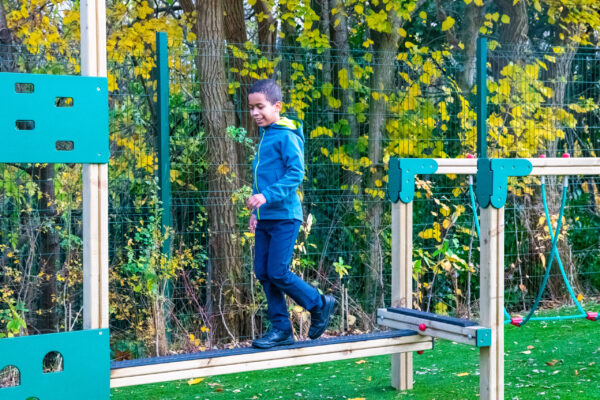
Straight-line layouts
Ideal for long, narrow spaces, such as running parallel to perimeter fencing. A Straight-line Adventure Trail encourages sustained movement and progression, making it particularly effective for sequencing and fitness-based play.
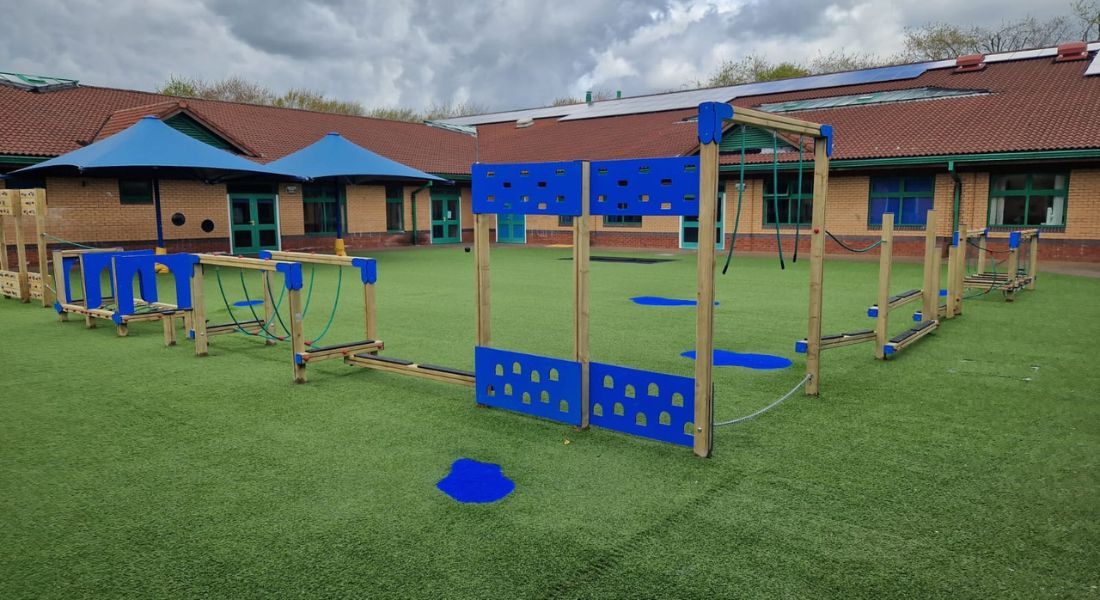
L-shape layouts
Perfect for corners and awkwardly shaped sites, the L-shape Adventure Trail layout allows schools to introduce physical challenge without dominating open play areas.
CASE STUDY: See how this Manchester SEN school takes advantage of an L-shape Adventure Trail to accommodate an awkwardly shaped space
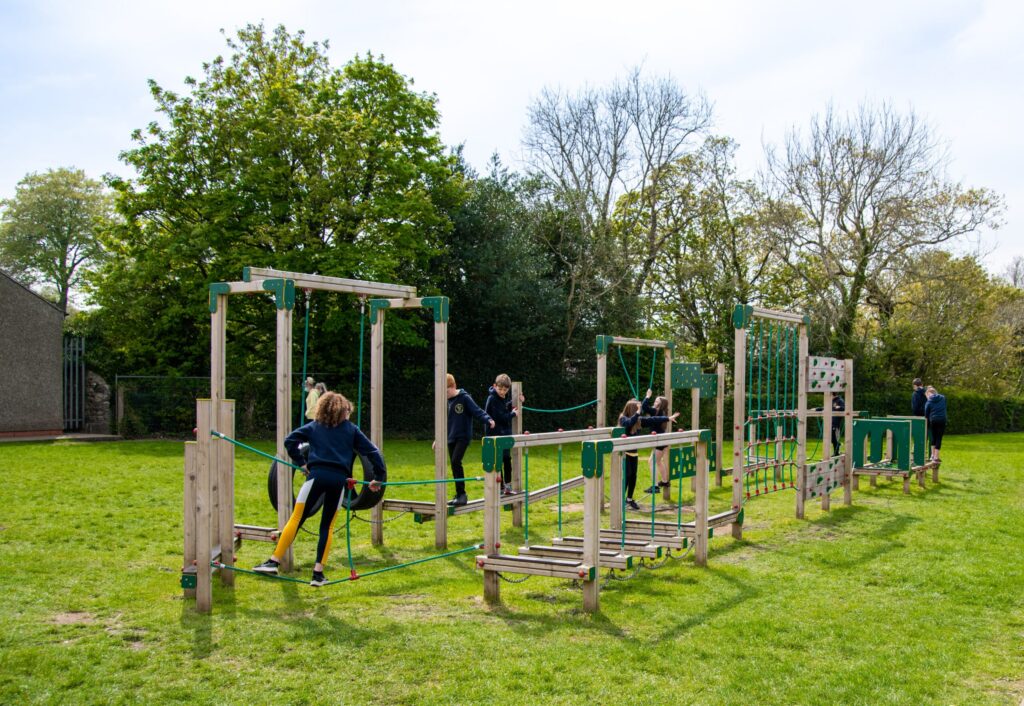
Closed-circuit and U-shape layouts
Closed circuits create a continuous loop, encouraging non-structured entry and exit. Children can join at any point, move around the circuit, and leave when ready – ideal for free-flow playtimes and inclusive engagement.
Closed-Circuit Adventure Trails are particularly effective for:
- Reducing queues
- Encouraging sustained activity
- Supporting social play without competition
The U-shape Adventure Trails are very similar, but with the cut section encouraging respite.
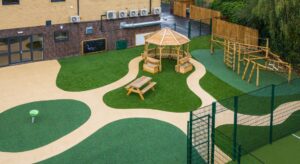
CASE STUDY: See how this London school added a closed-circuit Adventure Trail to their ‘nature’ zone
SEND: How Adventure Trails and MUGAs support inclusivity through purposeful outdoor movement
For some children, particularly those with SEND, regulation is not primarily a behavioural issue but a neurological and sensory one. Difficulties with attention, emotional control or social interaction are often linked to unmet sensory and movement needs rather than motivation or intent.
Outdoor play equipment that offers predictable movement, clear structure and meaningful physical feedback can play an important role in addressing this.
Adventure Trails provide opportunities for rhythmic, repetitive and proprioceptive movement, which many children find organising and calming. The ability to engage at a self-selected pace, repeat activities, or step away without disrupting others supports autonomy and reduces pressure. Multiple entry and exit points also allow children to participate without the social demands that come with turn-taking or competitive play.
MUGAs, by contrast, offer clear spatial boundaries and consistent rules, which can be reassuring for children who benefit from structure and routine. When used flexibly, they allow staff to adapt activities to suit different needs – from small-group skill practice to low-pressure movement sessions that prioritise regulation over performance.
Together, these spaces can support inclusive outdoor environments where movement is available as a tool for regulation, not a reward. Rather than separating SEND provision from the wider playground, they allow children to access physical activity in ways that feel safe, purposeful and appropriate to their individual needs.

MUGAs and Adventure Trails: A balanced playground approach
Paired together, Adventure Trails and MUGAs support both behaviour regulation and curriculum delivery to an outstanding degree, which explains their enduring popularity among schools across the UK.
One provides structured opportunities to develop physical competence, teamwork and rule-based behaviour in line with PE curriculum objectives. The other bolsters the conditions required for learning – regulation, focus and emotional readiness.
They both support physical development, reinforce behavioural expectations and create outdoor settings that actively contribute to teaching and learning through play.
Explore the Creative Play Brochure for a range of MUGAs and Adventure Trails suitable for your school outdoor play area.