Discover How To Make The Most Of Your Outdoor Play Space
Design School Playgrounds That Actually Work:
A Practical Guide To Planning For Different Sizes, Shapes And Demands
Most schools aren’t working with ideal conditions. Narrow spaces, awkward boundaries, level changes, shared age groups and supervision pressures are far more common than wide, open playgrounds.
The good news? Effective playgrounds aren’t defined by size – they’re defined by layout.
With the right planning approach, even constrained or irregular school grounds can support physical activity, social interaction, inclusion and age-appropriate challenge, without creating supervision or behaviour issues.
This guide explores practical, design-led principles for getting more from your outdoor space, whether your playground is compact or expansive, rectangular or irregular – and ensuring it works for pupils and staff alike.
Start With The Constraints, Not Equipment
Think Beyond Fences When Zoning
Choose Equipment That Delivers Multiple Outcomes
Use Vertical Space To Increase Capacity
Turn Awkward Shapes Into Design Advantages
Recognise Timetables As Part Of The Design
Let Surfacing Define Behaviour
Build Inclusion Into The Layout, Not Around It
Remember That Layout Directly Affects Behaviour And Supervision
Prioritise Bespoke Design In Small Spaces
Too Big? Maximise Large Playground Opportunities
Applying These Principles To Your School Playground
Test your ideas and identify ways to get more from your space and budget:
The most common mistake in small playground design is starting with equipment choices rather than site realities. Effective playground planning begins with a clear understanding of constraints, including:
Exact dimensions and boundaries
Drainage, gradients and level changes
Access points, fire exits and maintenance routes
Sightlines for supervision
Existing features such as trees, walls or structures
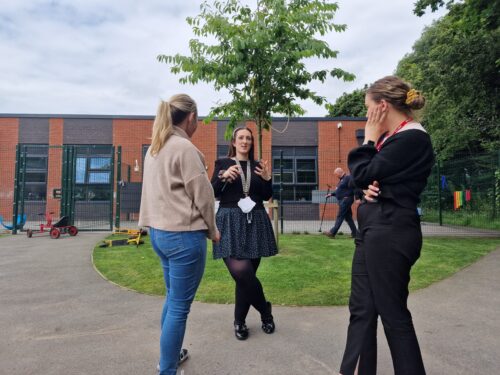
That’s why Creative Play ensures a consultant visits your grounds at the very start of the process. A site visit allows us to assess what is genuinely possible within the space, identify opportunities that are not obvious from photos, and flag constraints that could affect layout, safety or long-term use.
“Identifying these early is not about limiting what can be achieved. More often, a site visit opens up better ways to use the space, leading to ideas and layouts that improve on the original brief rather than restrict it” – Design Manager, Creative Play
Just as importantly, the visit offers an opportunity to discuss your play equipment preferences, how different areas are used throughout the school day, and the specific needs of your pupils. Understanding how children of different ages move, play and interact within the area is essential when designing for shared or limited space playgrounds.
Addressing these factors early allows the design to work with the site, rather than forcing unsuitable layouts into it.
When multiple age groups share a small playground, the instinct is often to separate them with physical barriers. In reality, this usually wastes space and creates supervision challenges.
A more effective approach is functional zoning, where different types of play are grouped logically rather than physically divided. For example:
Higher-energy activities placed away from entrances and quieter areas
Social or sensory elements positioned along natural circulation routes to avoid ‘dead space’
Flexible spaces that adapt to the needs of various age groups at different times
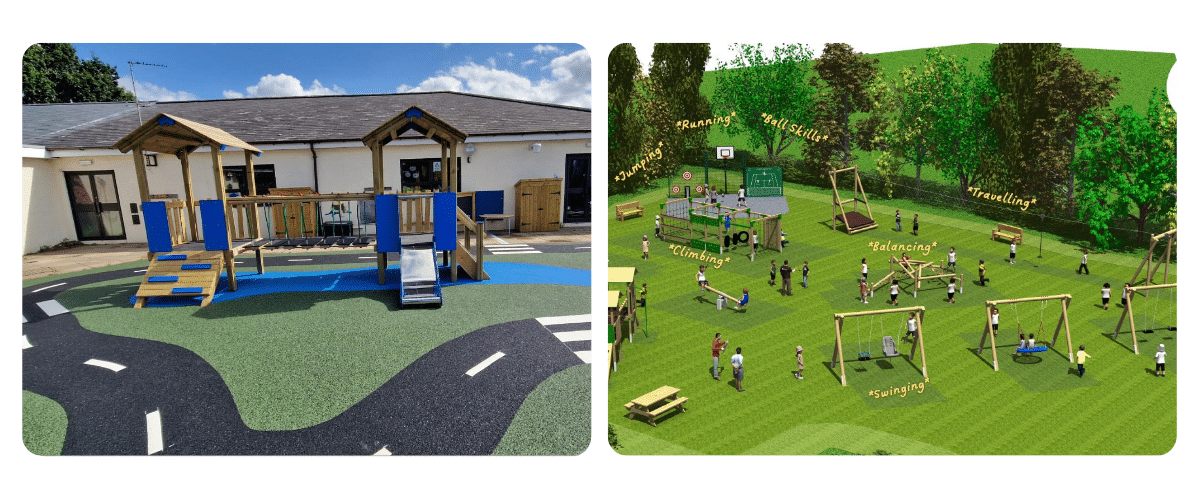
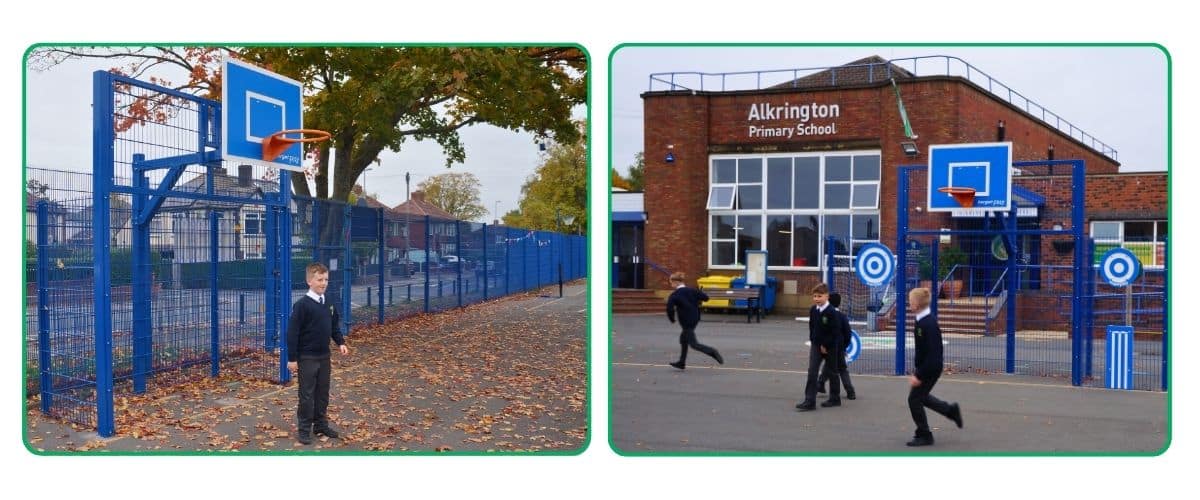
Alkrington Primary School playground is a great example of how creative layout design can guide children to appropriate areas without physical barriers. This zoning case study shows how flexible planning maximised a limited shared space by positioning equipment according to skill levels, effectively managing mixed KS1 and KS2 use.
“Changes in surfacing colour, equipment scale and layout often provide enough distinction without the need for fencing, allowing the space to remain flexible” – Design Manager, Creative Play
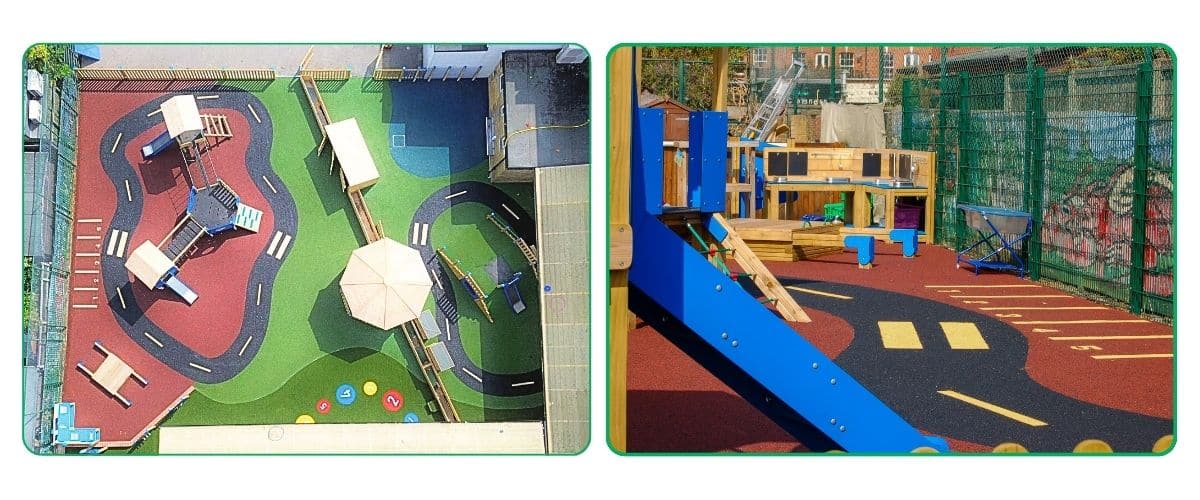
When physical barriers are needed, space can still be maximised creatively. For example, at St Mary’s Catholic Primary School we used planters, a storage unit, and an outdoor classroom to separate zones, ensuring every part of the limited space was put to good use.
In a constrained playground, every square metre needs to work harder. Equipment should be selected for the range of outcomes it provides, not just its footprint.
Multi-use equipment can support:
Physical development (balance, coordination, strength)
Social interaction and cooperative play
Imaginative use
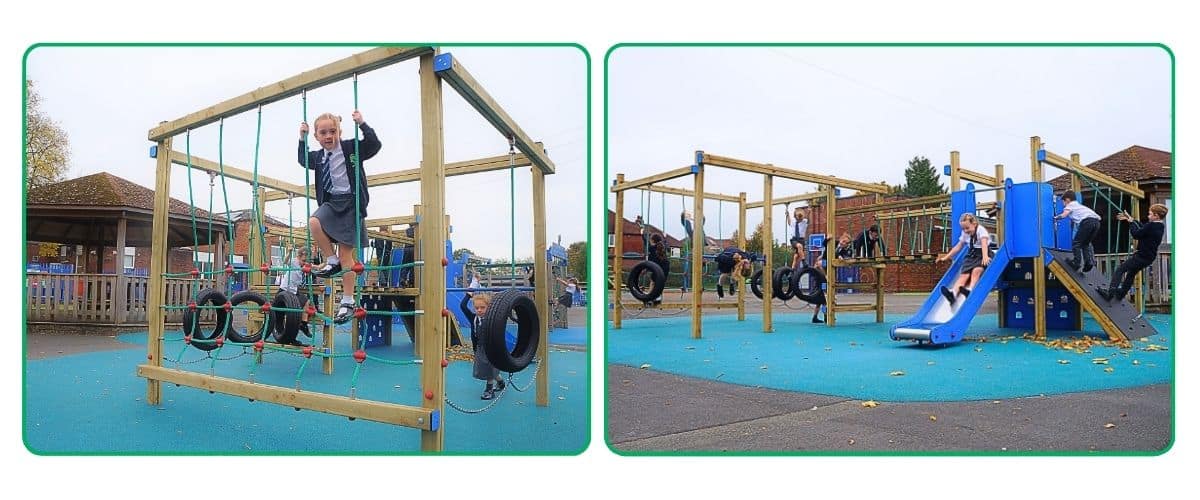
Trails, traversing structures and combination activity centres are particularly effective in smaller spaces because they offer graduated challenge. Younger or less confident pupils can use them at a basic level, while older and more experienced children engage with the same equipment more competitively or creatively. This reduces the need to duplicate provision for different age groups.
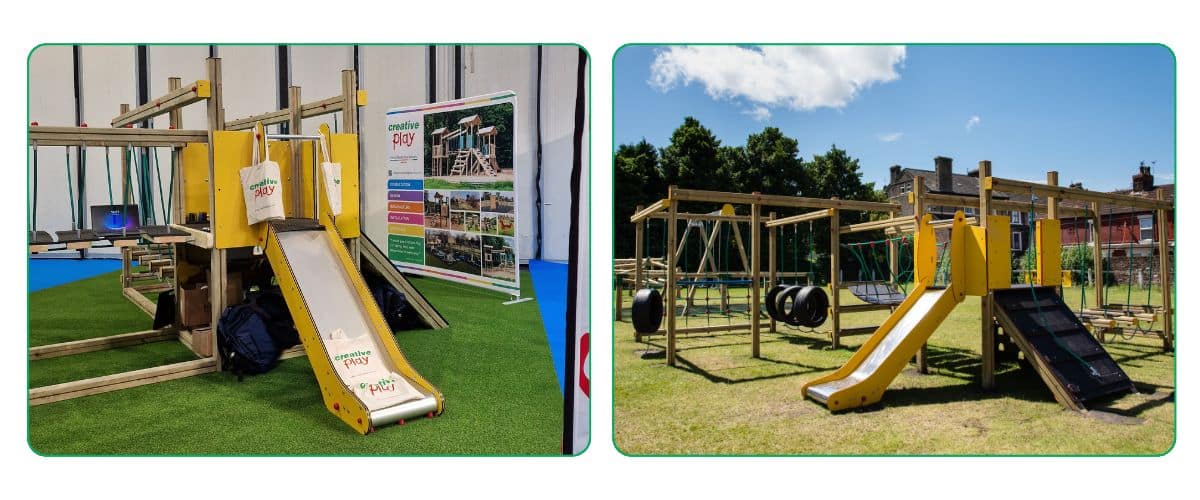
“The DART activity centre’s popularity with schools is no accident. It can accommodate up to 30 users simultaneously within an efficient footprint, demonstrating how multiple access and exit points maximise play opportunities. While not a small structure, it makes exceptionally economical use of space without compromising play value, offering impressive features such as a slide, tyre crossing, clatterbridge, log walk, rope climb, pull-up bar, climbing panel, and tyre swing” – Product Design Manager, Creative Play
Also efficient in use of space while delivering high-value play are Climbing Frames
Use Vertical Space To Increase Capacity
“When horizontal space is fixed, vertical design becomes one of the most powerful tools available” – Outdoor Play Expert, Creative Play
Multi-level structures, elevated routes and climbing elements can significantly increase play capacity without expanding footprint. Vertical play also introduces varied challenge and supports upper-body strength, balance and spatial awareness.
“This approach must always be supported by appropriate fall height surfacing in compliance with BSEN 1177 safety standards, but when designed correctly it allows smaller playgrounds to feel far more generous in use” – Outdoor Play Advisor, Creative Play
Irregular playgrounds are often seen as a problem, but they can offer opportunities that square sites do not.
Long, narrow spaces lend themselves well to:
Linear adventure trails
Circulation routes that reduce congestion
Clear start-to-finish challenges
Corners and recesses can be used for:
Quiet seating or social areas
Sensory or low-stimulus elements
Equipment that would otherwise sit awkwardly in open space
Designing to the shape of the site, rather than trying to impose symmetry, usually results in better flow and more usable space.
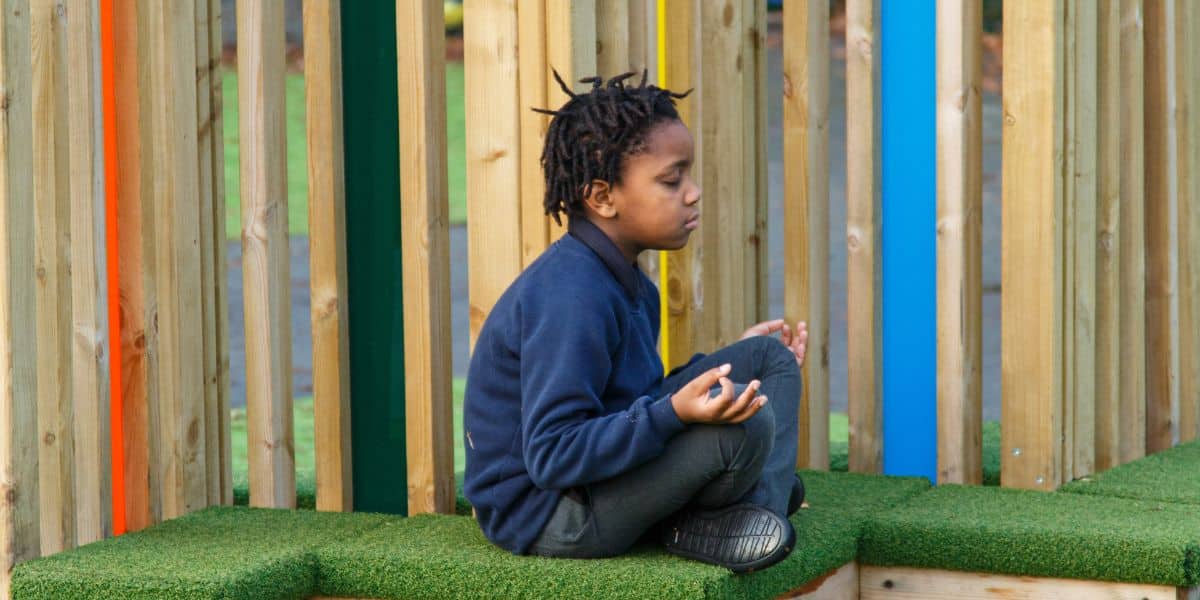
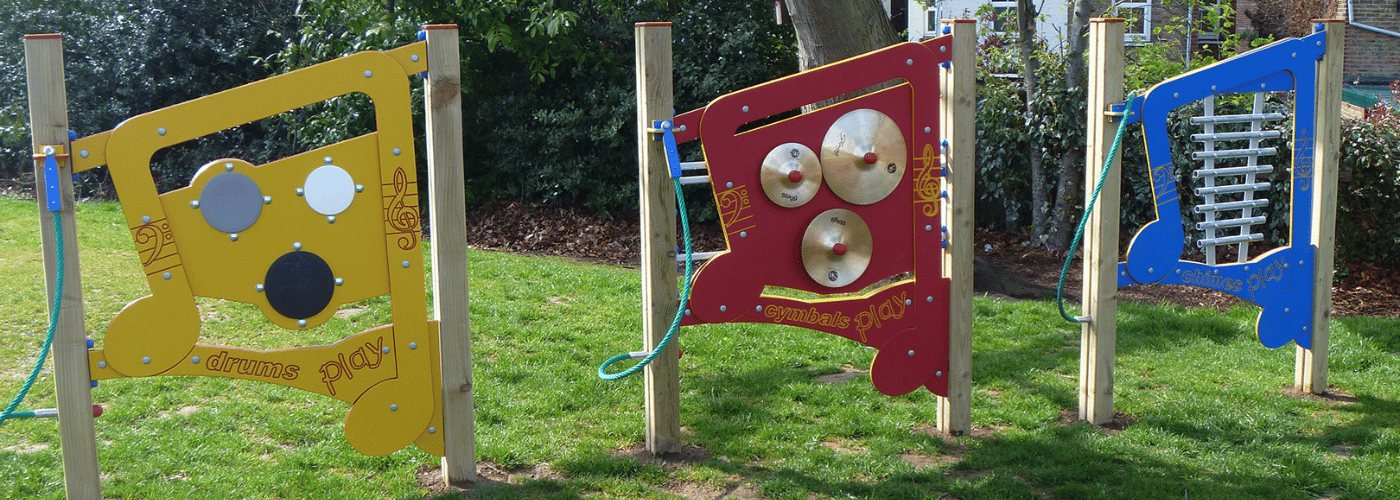
“Trim Trails, and to a lesser extent Adventure Trails, can often fill narrow or awkward sections very well. Many overlooked areas, such as nooks and corners, can be transformed with equipment schools might not initially consider, like seating for quiet or social spaces, planters, sand play elements, and music panels. Essentially, outdoor play equipment that supports social interaction and sensory regulation” – Playground Designer, Creative Play
Space limitations are not only physical. How a playground is used throughout the school day is just as important. The same area may be used differently for breaktimes, lunchtimes, PE lessons or small group activities.
Designs that support flexible use through clear sightlines, durable surfacing and adaptable layouts allow schools to maximise value from limited space. Timetabled use can often remove the need for additional separation or duplicated facilities.
“Outdoor play items which can service more than one type of play, and therefore more than one type of user, are possibly the most efficient use of space. Nothing does this better than a Multi-Use Games Area, a playground section specifically designed to service a variety of ages and skill levels at different times” – Product Design Manager, Creative Play
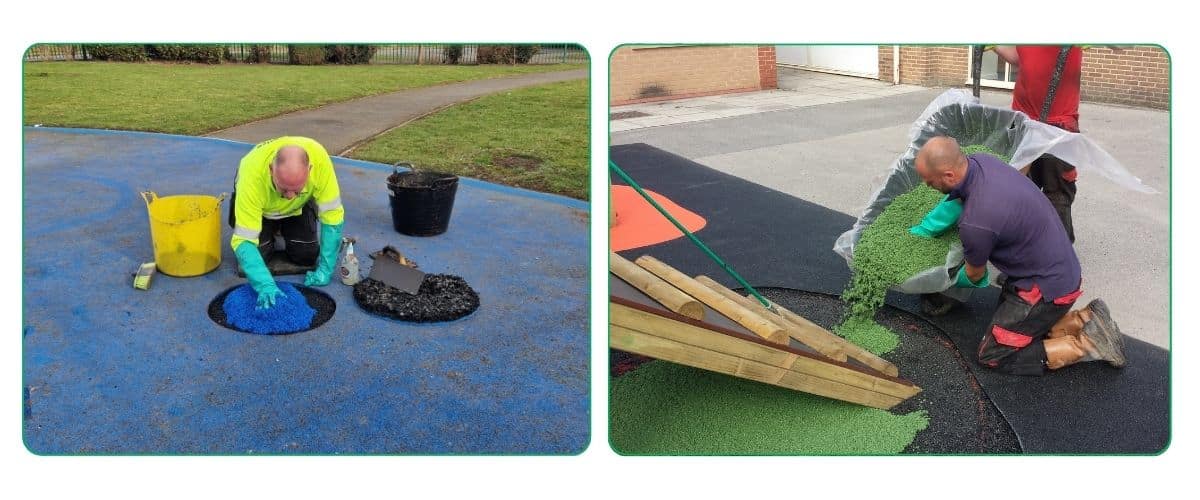
Surfacing choice plays a critical role in managing flow and behaviour, especially in small playgrounds where space and movement need careful control.
Different surfaces can signal different types of use without adding physical clutter:
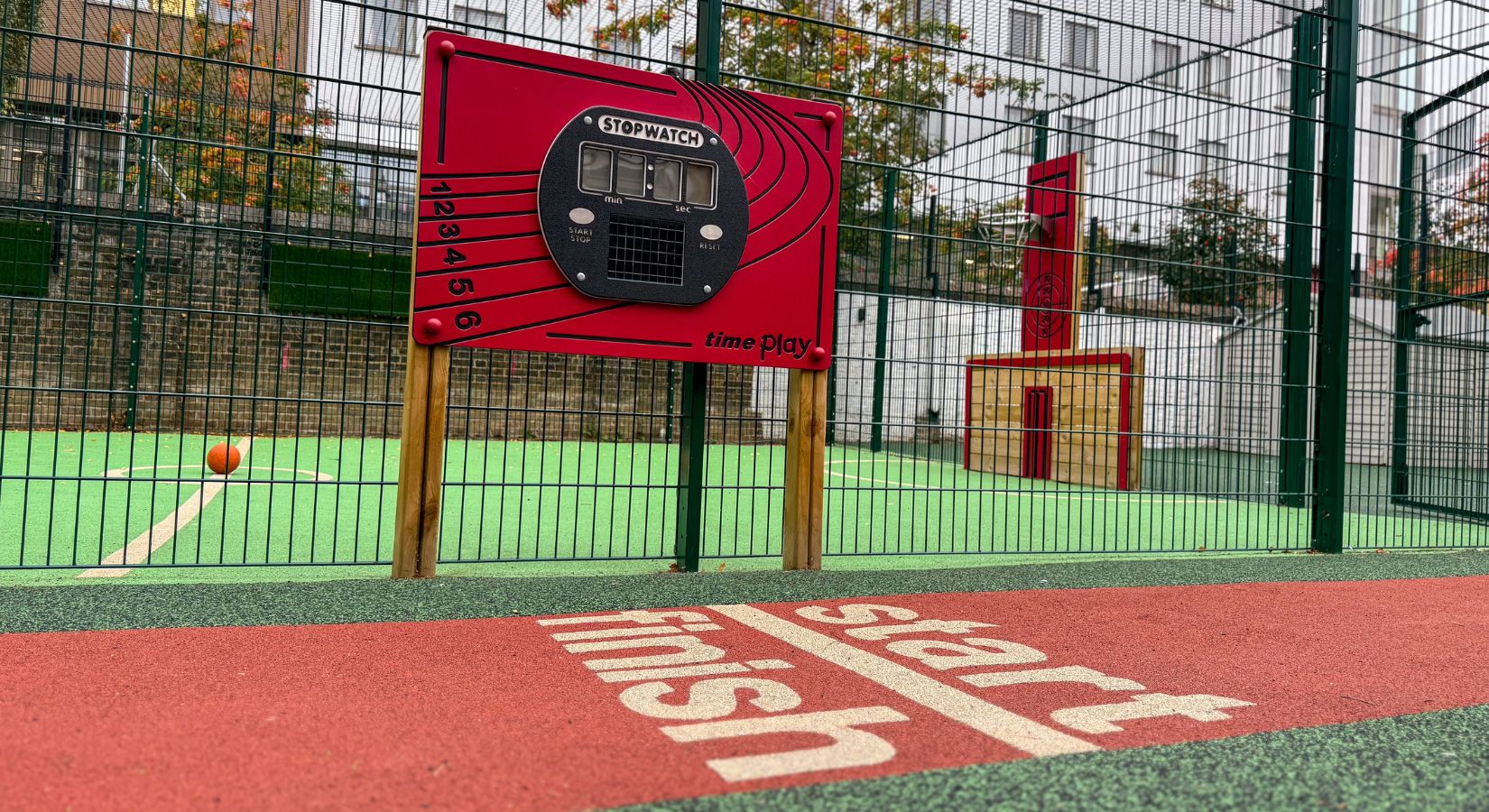
Sports surfacing for high-energy activity
Wetpour or rubber mulch for integrated equipment
Line markings to create informal zones and games
“This approach allows multiple activities to coexist in close proximity while remaining purposeful and manageable” – Playground Designer, Creative Play
Inclusive design does not require separate areas, particularly where space is limited. In fact, segregation reduces both inclusion and efficiency!
Inclusive playgrounds work best when:
Routes offer alternative access points
Ground-level play sits alongside elevated challenges
Seating and rest points are integrated into circulation
By embedding inclusive features into shared spaces, schools can support a wider range of needs without increasing footprint or complexity.
“This isn’t just about giving children more access to play equipment so they can have fun. It’s about affording them opportunities to play alongside their friends, so they’re part of the action, not just watching from the side lines” – Outdoor Play Advisor
Planning an effective inclusive playground can be challenging, so involving a professional from the outset is highly recommended. Book a Free Consultation With An Outdoor Play Expert
See how Creative Play developed inclusive playground equipment in collaboration with a SEN school: Watch The Mini-Documentary
Remember That Layout Directly Affects Behaviour And Supervision
Poorly planned small playgrounds often suffer from:
Bottlenecks and congestion
Conflict between age groups
Areas that are difficult for staff to supervise
Thoughtful equipment placement, clear movement routes and open sightlines reduce these issues significantly. A well-designed layout makes limited space feel calmer, safer and easier to manage.
“Schools often know what play equipment they want but can overlook supervision needs. For instance, they may want a climbing wall, but its position might block sightlines. To solve this, we use traverse walls with open centres, keeping children visible while still providing great play value. There isn’t a single part of good playground design that doesn’t involve careful planning” – Outdoor Play Expert, Creative Play
Standard playground layouts can work well in many settings, but constrained sites often benefit more from a bespoke, modular approach. Tailoring the design to the space allows equipment to fit precisely within boundaries, reduces wasted margins, and can potentially avoid the need for unnecessary surfacing.
A site-specific design allows:
Equipment to fit precisely within boundaries
Awkward areas to be fully utilised
Budget to be focused on value rather than redundancy
“In small or irregular playgrounds, a bespoke approach is often essential to achieving long-term value from the available space” – Outdoor Play Advisor, Creative Play
Have it your way! Discover how you can create bespoke outdoor play equipment using Creative Play’s exclusive Jigsaw Modular Playground System
Too Big? Maximise Large Playground Opportunities
Large playgrounds offer excellent opportunities but require thoughtful planning to remain functional and engaging. Breaking the space into clear zones based on age groups, activity types, or skill levels helps pupils navigate and use the area effectively.
“Handled poorly, large play spaces can feel disconnected and underused. Making the most of additional space often means incorporating sports-focused layouts. Features such as cycle tracks, running routes, and linear adventure trails encourage active exploration and support a wide range of interests” – Design Manager, Creative Play
Balancing open spaces for free play and sports with structured equipment provides flexibility for different play styles and group sizes. Good supervision is essential, so layouts need to prioritise clear sightlines and strategically placed staff areas.
Inclusivity must be woven throughout, ideally with accessible paths and equipment distributed across zones. A major benefit of larger playgrounds is that landscaping with trees and planting can create shaded, sensory, or quiet retreat areas without sacrificing any play space.
Phased development is usually the best approach to large play areas, which can help manage budgets and adapt to changing needs. When designed thoughtfully, large playgrounds become vibrant environments supporting activity, social interaction, and creativity for all pupils.
Applying These Principles To Your School Playground
Every school playground is shaped by its own set of constraints, opportunities and day-to-day demands. Whether you’re working with a tight footprint, an awkward layout, or an expansive site that needs structure and clarity, the most successful outcomes come from thoughtful planning that responds to how the space is actually used.
By starting with the site, considering behaviour and supervision, and designing inclusively from the outset, schools can create playgrounds that work harder, last longer and deliver genuine value for pupils and staff alike.
If you’re considering changes to your school grounds, a professional site visit can help uncover possibilities you may not have considered and ensure your space is used to its full potential.
Sense-check your ideas and identify opportunities you may not have considered
See what we can design and build for your playground project
Manage Cookie Consent
We use technologies like cookies to store and/or access device information. We do this to improve browsing experience and to show (non-) personalised ads. Consenting to these technologies will allow us to process data such as browsing behaviour or unique IDs on this site. Not consenting or withdrawing consent, may adversely affect certain features and functions.
Functional
Always active
The technical storage or access is strictly necessary for the legitimate purpose of enabling the use of a specific service explicitly requested by the subscriber or user, or for the sole purpose of carrying out the transmission of a communication over an electronic communications network.
Preferences
The technical storage or access is necessary for the legitimate purpose of storing preferences that are not requested by the subscriber or user.
Statistics
The technical storage or access that is used exclusively for statistical purposes.The technical storage or access that is used exclusively for anonymous statistical purposes. Without a subpoena, voluntary compliance on the part of your Internet Service Provider, or additional records from a third party, information stored or retrieved for this purpose alone cannot usually be used to identify you.
Marketing
The technical storage or access is required to create user profiles to send advertising, or to track the user on a website or across several websites for similar marketing purposes.