



How better playground design can reduce friction at playtime, improve engagement, and support a calmer return to class
Behaviour at playtime is influenced by more than supervision alone.
The design of a playground can affect how children move, interact, and regulate themselves throughout the school day. For schools reviewing behaviour, engagement, or how effectively their outdoor space is being used, the right design can create more opportunities for positive play and fewer situations where conflict is likely to arise.
Well-designed playgrounds do more than keep children active. They support decision-making, social interaction, emotional regulation, and purposeful engagement – all of which contribute to a more consistent approach to behaviour across the school day.
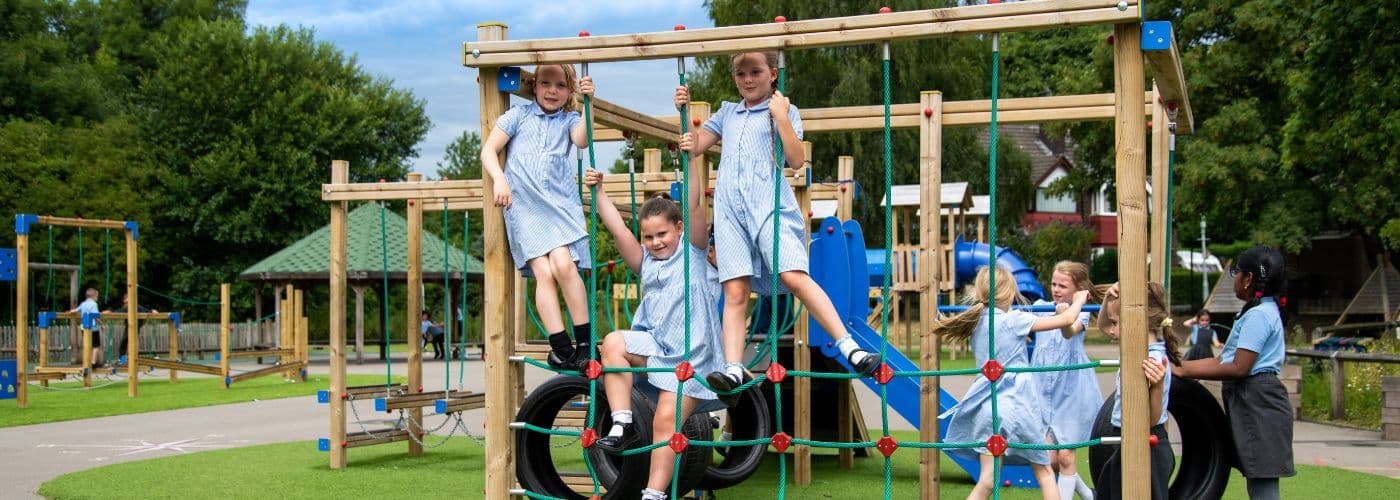
“It has changed our playtimes for the better on so many levels, supporting sensory needs, communication and social interaction” – Maple Grove School
Building Emotional Regulation Through Everyday Play
Outdoor play provides children with regular opportunities to experience and manage emotions such as frustration, excitement, and uncertainty. A UK study of 2,500 children by the Medical Research Council found that outdoor play supports social-emotional development, including resilience and the ability to regulate behaviour – foundations explicitly connected to Personal, Social and Emotional Development (PSED).
On the playground, children encounter challenge naturally through equipment such as climbing structures, balance beams, and multi-use pieces, which require them to assess situations, persist through difficulty, and manage impulses.
Example: At Rushton CE Primary School, the Adventure Trail 12 provides a sequence of physical challenges that encourages children to adapt their approach and re-engage repeatedly. The layout, which suggests a linear path, also requires occasional cooperation with peers to progress. This combination of physical challenge and social interaction supports both emotional regulation and teamwork skills.
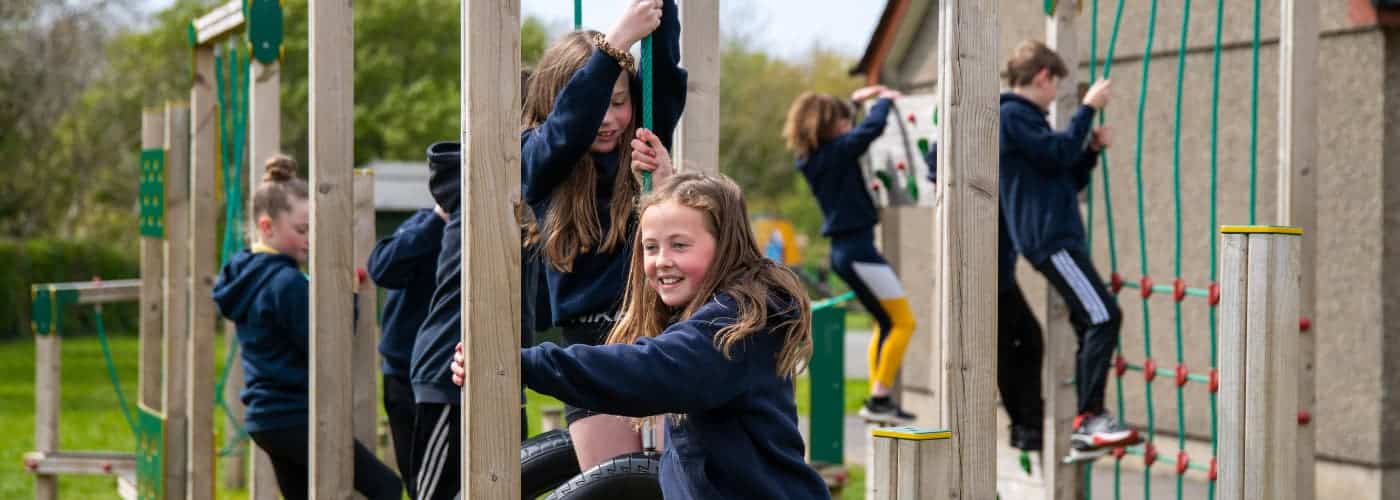
“[Creative Play installed] great pieces adding more scope for children to improve their cognitive skills” – Pikemere School
Using Playground Layout To Reduce Conflict And Encourage Choice
The way a playground is organised has a major effect on behaviour. Clearly defined zones for active play, social play, and quieter areas allow children to choose appropriate activities, reducing conflicts over space and enabling them to practise decision-making in a supportive environment.
“Behaviour challenges tend to be higher where play engagement is low. Grabbing children’s attention is a key factor when designing outdoor spaces”
– Amy, Product Design Manager
Example: At Alkrington Primary School, a multi-zone layout enables children to move between activity types depending on their energy levels, age, and social preferences. Sports areas, imaginative corners, and quiet spaces give children opportunities to self-regulate and engage in the play style that suits them best. This flexibility supports engagement and reduces the likelihood of behavioural escalation.
“Even small adjustments to the layout can lead to noticeable improvements in how children use the space at breaktimes”
– Dwayne, Playground Design Manager

Supporting Behaviour Expectations Through Social Play
Playgrounds are real-world social classrooms. Children practise turn-taking, cooperation, and understanding informal rules as part of daily play. These experiences align with the Department for Education’s Behaviour in Schools guidance, particularly around consistency, routines, and positive social norms.
Example: At Prospect House Primary, a sensory and inclusive play area encourages mixed-ability play. Features such as sensory panels and accessible play towers allow children to work together, adapting to each other’s needs and practising empathy, patience, and collaboration. Playgrounds designed in this way reinforce school-wide behavioural expectations beyond the classroom.
Discuss how your playground could better support behaviour, engagement, and playtime structure:
CONNECT WITH AN OUTDOOR PLAY EXPERT
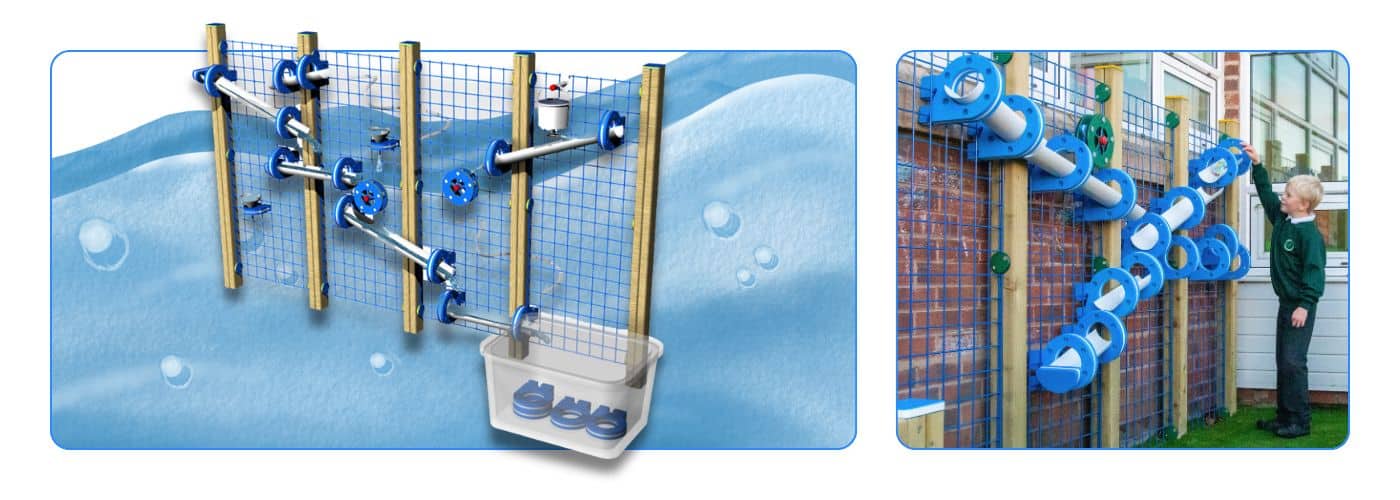
“The Water Wall in particular does a job that other companies’ products don’t match as it allows for child led investigation”
– St Laurence Church Infant School
Engagement Drives Positive Behaviour
Engaged children behave differently. When play is absorbing and purposeful, they are less likely to become disengaged or act out. Well-designed environments support sustained activity rather than short bursts of unstructured movement. Climbing structures, activity panels, and multi-use games areas encourage children to focus for longer periods, take ownership of their play, and interact meaningfully with peers.
Over time, children begin to organise games themselves, establish informal rules, and resolve minor disagreements independently. Supervision remains important, but its role shifts from managing behaviour to guiding interaction and supporting safe decision-making.

What This Means for Schools
Successful playgrounds:
- Provide clearly defined zones to reduce conflict
- Introduce appropriate challenges to build resilience
- Encourage choice and movement to support self-regulation
- Create opportunities for social interaction and cooperation
- Are supported by staff who reinforce positive behaviours without over-directing play
Well-designed playgrounds are not just spaces for activity – they are environments where behaviour is practised. These opportunities, integrated into everyday play, contribute to a more consistent, whole-school approach to behaviour.
Next Step
Schools across the UK work with Creative Play to create outdoor spaces that support behaviour, engagement, and structured play. If you’re reviewing your current playground, we can assess the space and identify where changes could make the biggest difference.
Book a consultation to explore what this could look like in your school
Sources
The Guardian
Science Direct
Outdoor Play And Learning
Bio Med Central
Discover more playground insights:
Benefits of term-time school playground installs
How to create a sustainable school playground
How outdoor play aids the 7 areas of learning and development
The 6 key benefits of outdoor play for children
How to design an inclusive playground
