See how this new therapeutic school in Bolton developed an inclusive playground to support the physical and emotional needs of its pupils with autism.
- Creating a variety of ways to play for pupils of a broad age range with autism and associated needs
- Using an easily visible shelter to create a quieter space without isolating children from the wider playground
- Offering different levels of climbing challenge with a single piece of equipment
- Designing a path that makes movement between play equipment easier
- Combining free play, sensory exploration and structured physical activity in one connected space
Lake House School
Lake House School in Bolton is a new independent therapeutic school supporting up to 78 children aged 5-16 with autism and associated needs. Many of its pupils have found mainstream or larger specialist schools “incredibly difficult or distressing”, so the school takes a relational approach to creating a calm, structured environment where “every child is known, heard and valued as an individual”.
Part of Blazing Stars Education and a partner of the Neuroinclusive Education Network, its aim is to build confidence, independence and resilience through meaningful experiences – with every space carefully designed to support pupils’ learning and development.
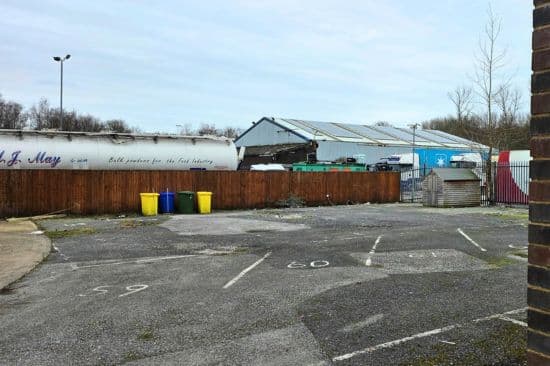
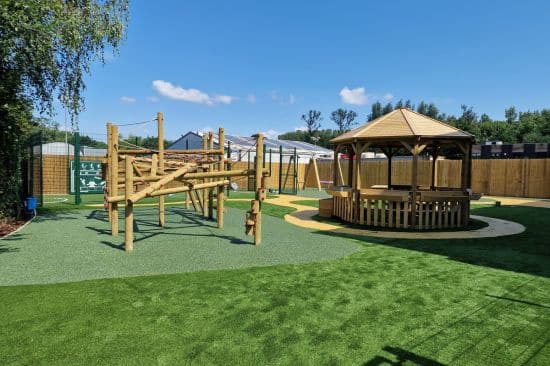
BEFORE
AFTER
Customer Objectives
For the new playground, Lake House wanted an environment that reflected its philosophy that “every pupil is unique” by offering a variety of ways to move, explore, interact and participate. This also meant the outdoor play area would need to provide opportunities for “physical development, social interaction and quieter exploration”- while allowing pupils to choose what suits them at different times.
Another requirement was for the new space to support both everyday outdoor play and more structured learning, with a clear layout and accessible routes to help pupils understand and navigate the area independently.
Consultation
Creative Play’s Outdoor Play Expert Tim visited Lake House to assess the space and discuss the project in person. Working through the brief with the school, they explored different equipment and layout options, considering how they could work for the pupils and what would be most practical to install.
The process helped shape the final selection and positioning of the equipment, with the installation and completion of the project estimated to take around three months.
From Design Brief To Playground: Equipment Choices
The eventual equipment selected brings together a carefully considered mix of features, each chosen for a specific purpose within the wider design and the way pupils will use and experience the outdoor play area.
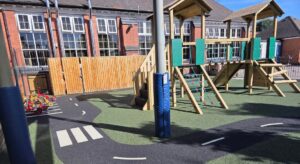
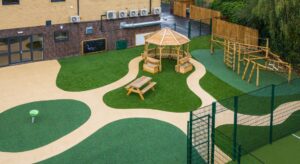
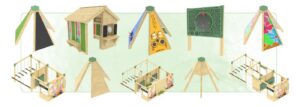
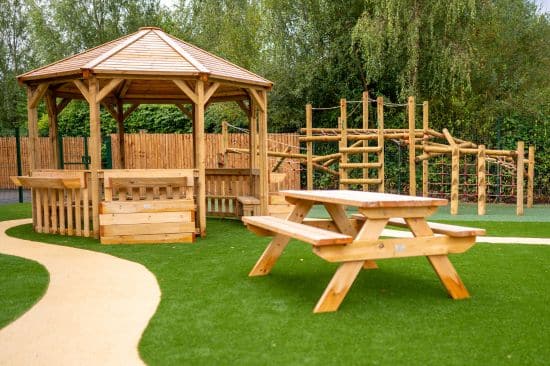
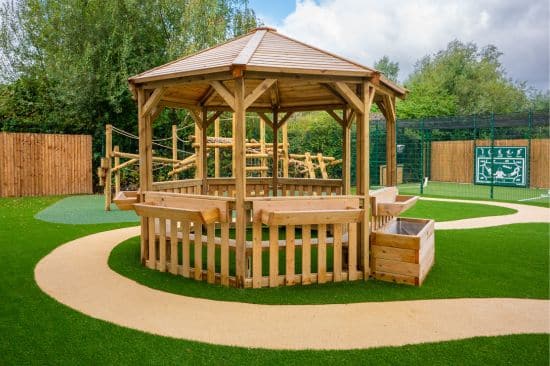
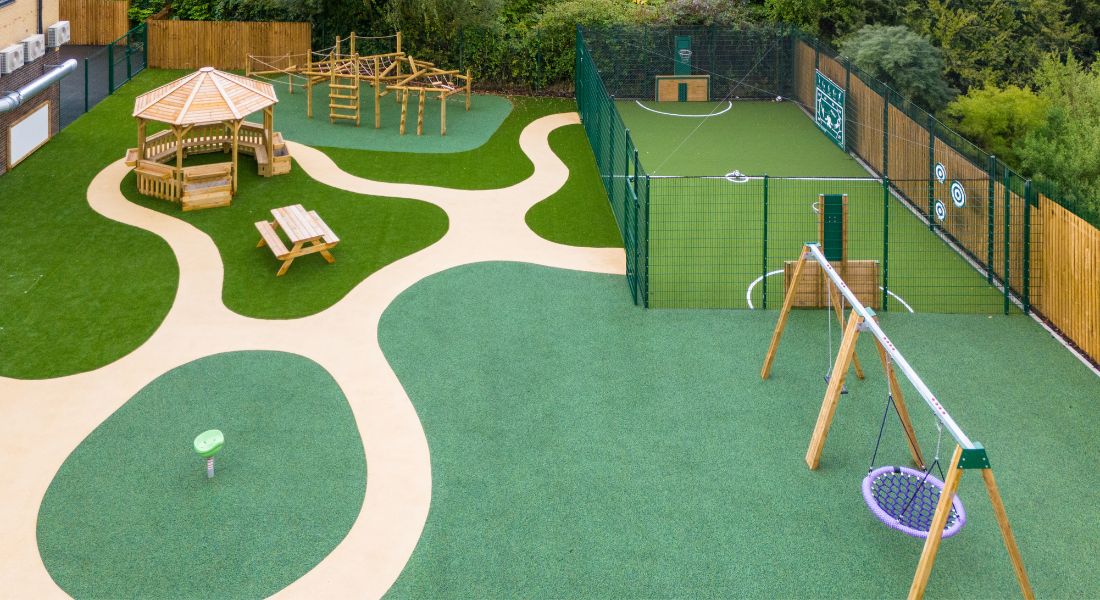
Octavia Shelter: Quiet, Social And Exploratory Play
Having a shelter within the play area gives a sense that there are different places to go, even within a compact space. For some children, that change of environment can provide a feeling of security in what can otherwise be quite an open and overwhelming space.
“Adding seating makes it somewhere to socialise, but also somewhere to take a moment or have some quiet time” says Tim, “while the artificial grass gives a soft, familiar texture underfoot and helps connect the shelter with the rest of the play area, so moving between the different spaces doesn’t feel like such a big change. The planters around the outside bring in a sense of nature too, creating something interesting to look at and explore”.
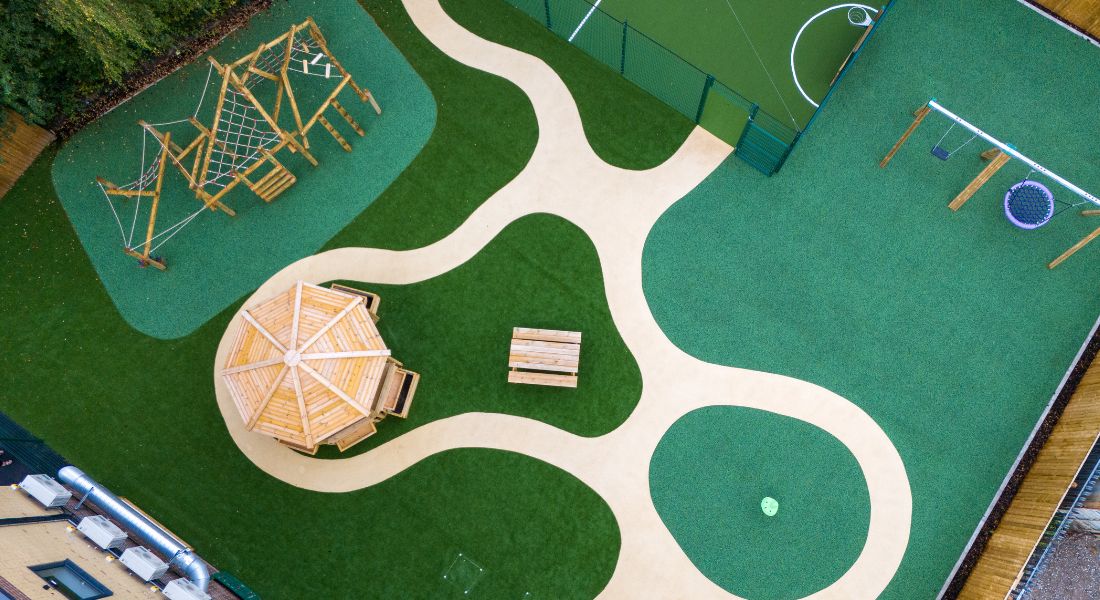
“The 360-degree visibility of the shelter is important. Children can see what’s happening around them, so they don’t feel enclosed or hidden away, while supervising staff can still see them. And because the path goes all the way around, children can still engage with others from outside of it. It gives them choices about how they use the space, rather than directing them towards one way of playing”.
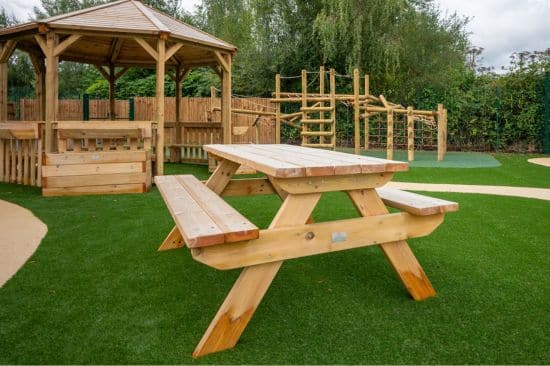
Next to the Octavia shelter is a picnic table, which gives children somewhere to take a breather from physical play without having to leave the social environment. “They can sit, watch what’s happening around them and continue interacting with other children, so taking a break doesn’t mean becoming disconnected from the rest of the playing going on.”
Busy Board: Following Their Own Curiosity
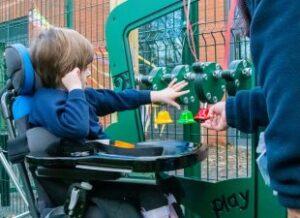
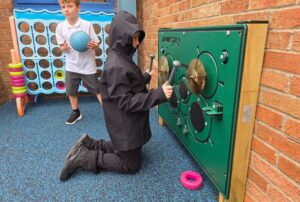
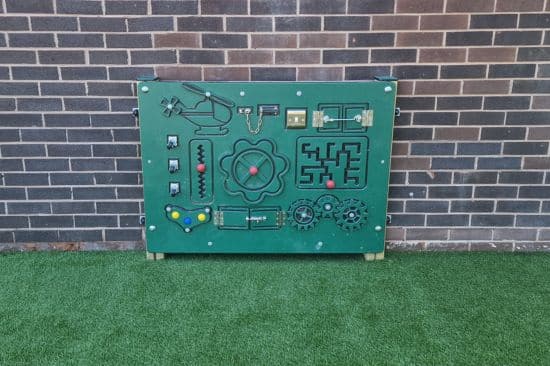
The busy board is positioned close to the ground so children can engage with it in a very casual way. They can sit on the grass-style floor, explore the different features and just take their time with it. “There’s no particular way they have to use it” says Tim, “so they can lose themselves in the moment and follow whatever catches their attention.”
White Board & Chalk Board: Making Creativity Social
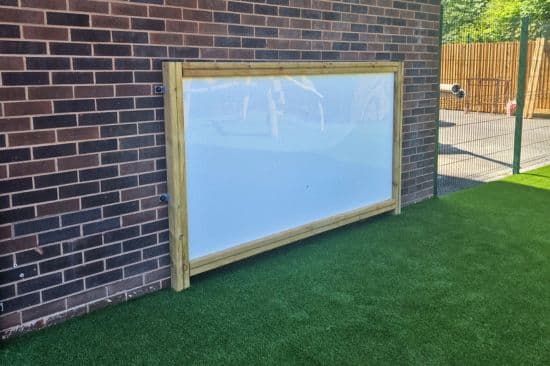
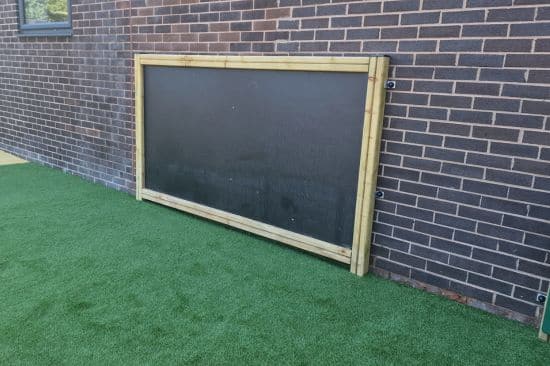
A whiteboard and chalkboard give children an easy way to express themselves and be creative. Because they’re large and wide, more than one child can use them at the same time, adding a social aspect to creativity and expression where they can share ideas and see what the other children are doing.
Jungle Climber: A Progressive Series Of Physical And Sensory Experiences
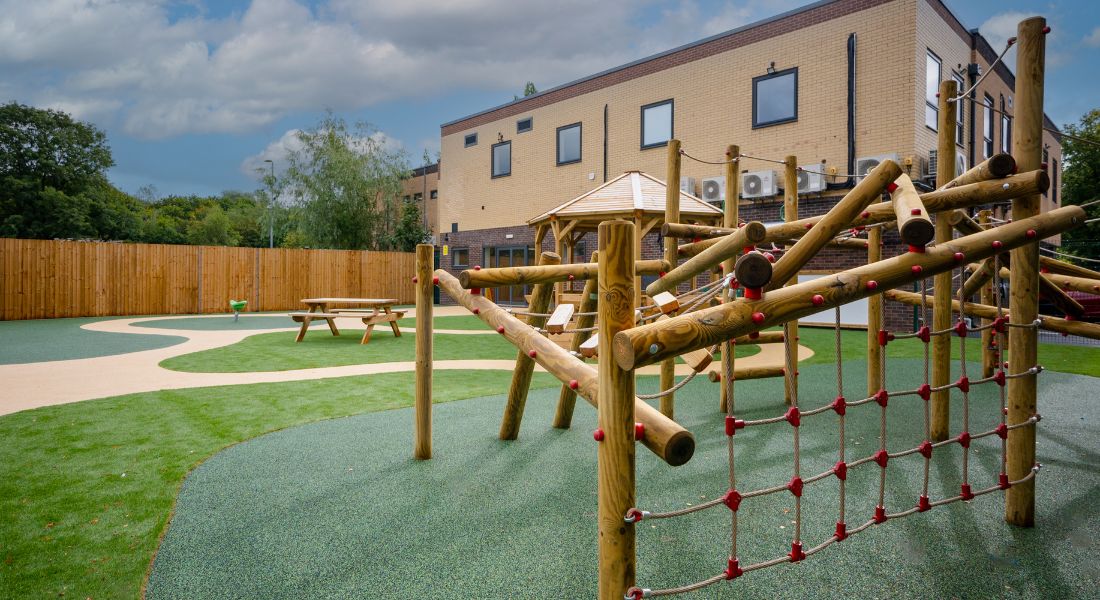
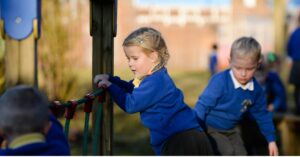
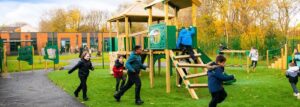
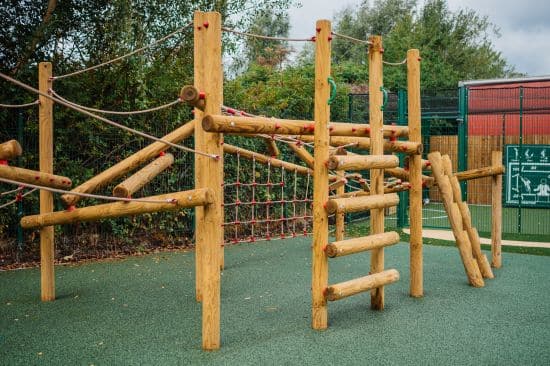
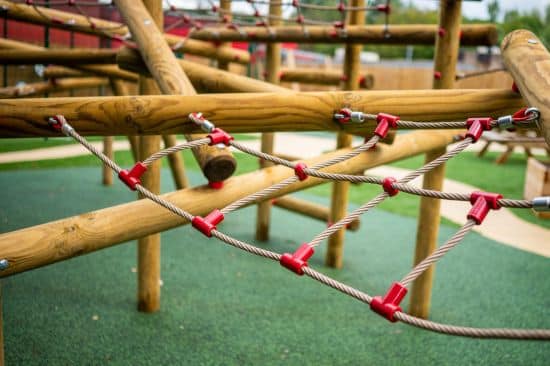
The Jungle Climber has been designed with different levels and types of physical challenge in mind, so children can build their climbing skills as their confidence grows. Ropes at the lower level give younger or less experienced climbers somewhere to start, while the round timber beams and netting higher up provide a greater challenge.
“These climbing challenges introduce children to different types of movement, particularly around motor planning” explains Tim. “They must work out where to place their hands and feet, shift their weight and coordinate each step as they climb. Using both sides of their body in this way is a great way to exercise reciprocal bilateral coordination”.
Climbing also provides lots of opportunities for proprioceptive input, helping children develop awareness of where their body is in space. “So they’re getting a really broad range of physical and sensory experiences from one piece of equipment” says Tim, “with different challenges available as their skills and confidence develop”.
Solo Spinner: A First Step Into Rotational Movement
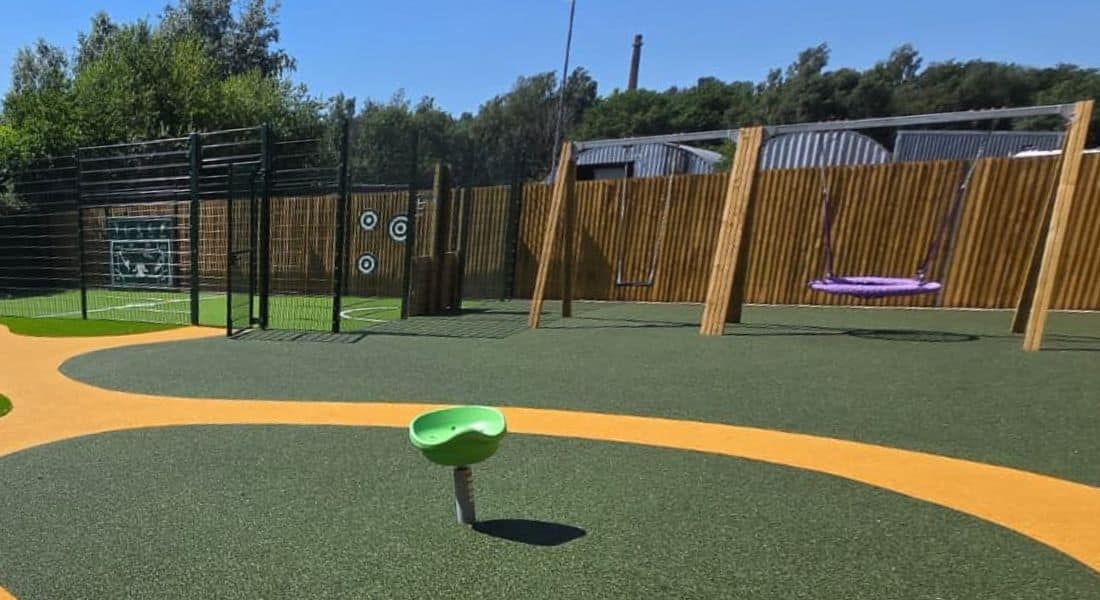
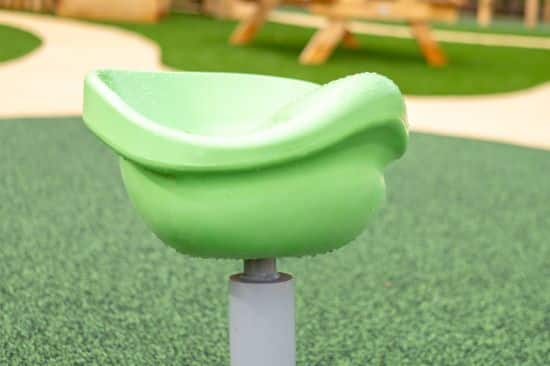
“The space around it is just as important as the spinner itself” highlights Tim. “We’ve deliberately left plenty of room so children can approach it, use it and move away again without feeling crowded, but it also gives them the opportunity to observe. For a child who isn’t familiar with rotational movement, watching another child spin first can be a really useful way of understanding the experience before deciding they’re ready to have a go themselves. There’s also enough space for an adult to be alongside a child and provide support if they need help using it”.
Rotational movement is an important part of children’s expanding sensory experiences, so having a simple opportunity to spin, stop and repeat the movement gives them another way to explore movement and their responses to it. “It’s a small piece of equipment, but it gives children a very clear, manageable movement experience”.

Swings: Independent And Shared Movement
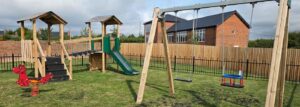
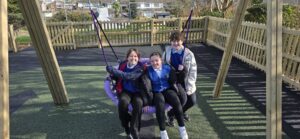
“We’ve included both a single swing seat and a basket swing because they offer two quite different ways to experience motion. The single seat allows a child to swing independently, with a greater sense of freedom and control over their movement, while the basket swing provides a more contained experience that several children can share together” says Tim. “It’s also low enough to make getting on and off easier for wheelchair users”.
Positioning the swings in a very open part of the playground is important, too. While using the equipment children can keep a clear view of their friends and everything else happening around them, “remaining connected to the wider play environment, and never feeling isolated. They can be active, observe what’s going on and decide whether they want to join in elsewhere”.
MUGA (Multi-Use Games Area): Kicking, Throwing, Aim And Control
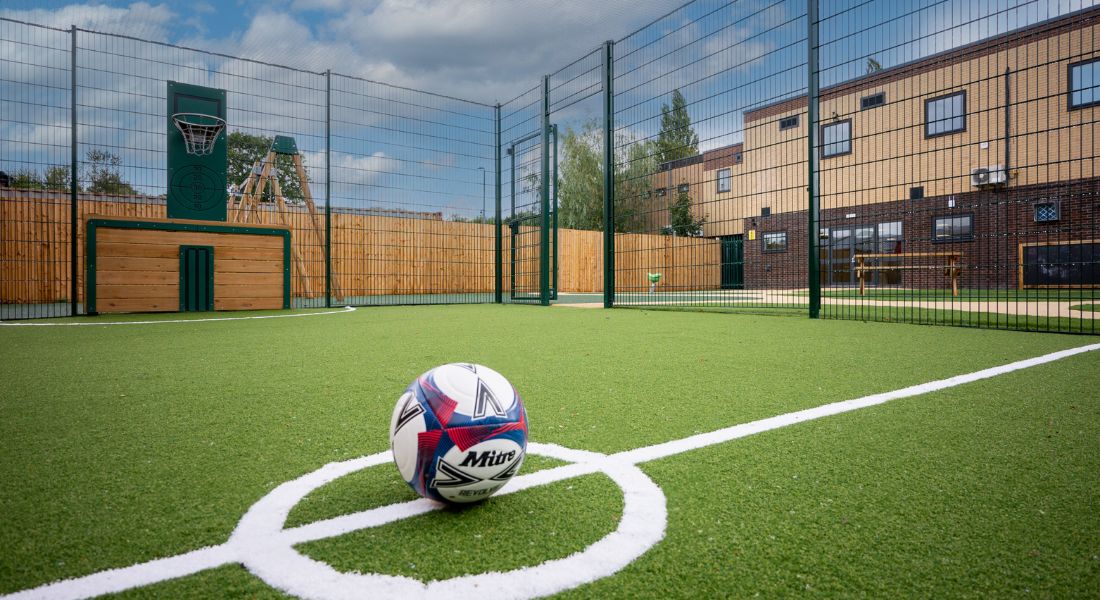
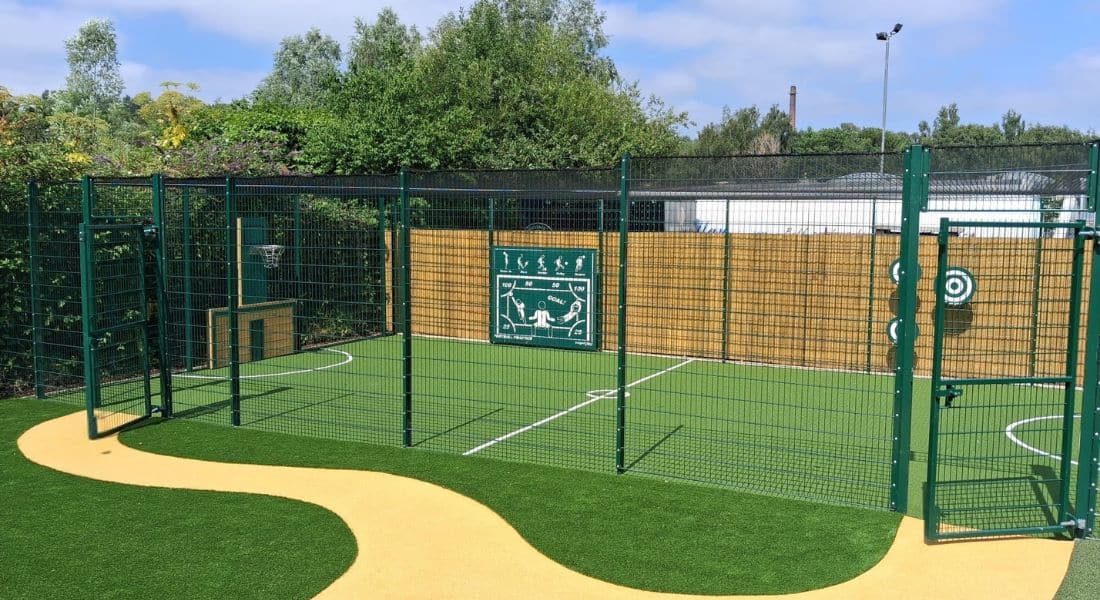
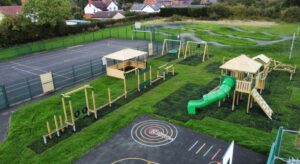
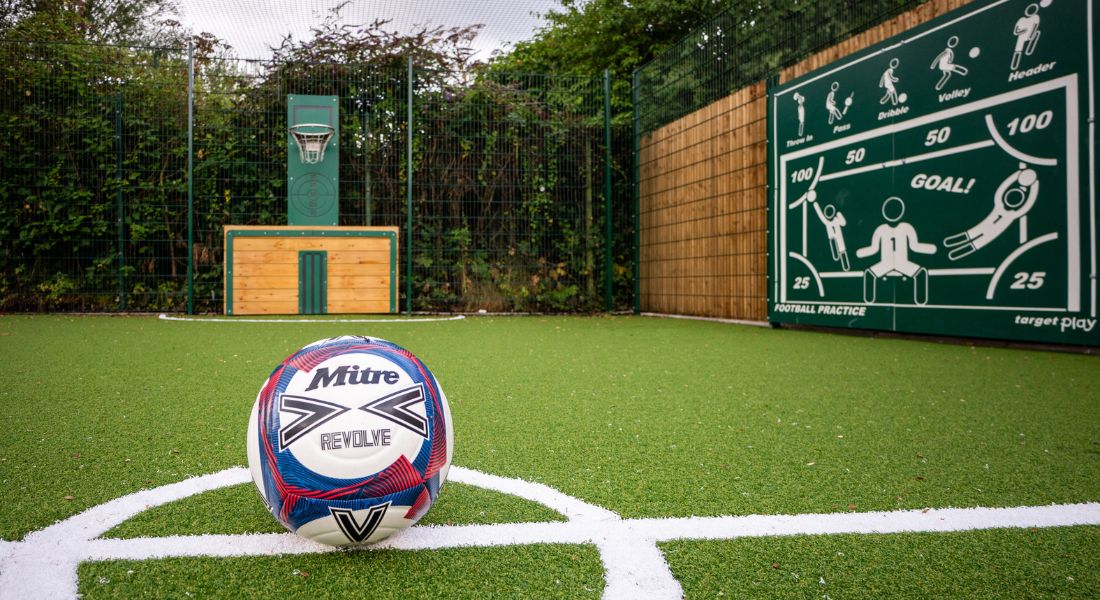
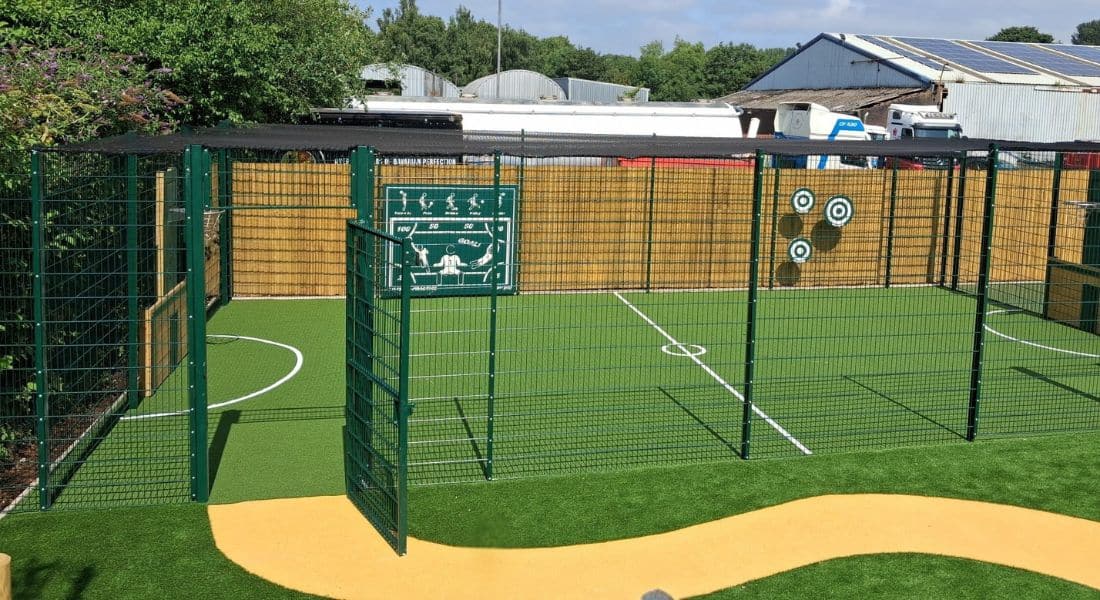
The MUGA gives children a clearly defined space for ball games, PE and other physical activities, with short artificial grass providing a firmer and more consistent surface than the longer grass used elsewhere in the playground. “We chose this surface because it is better suited to running, kicking and throwing, giving children greater control over the ball rather than making speed the focus” says Tim.
There are several elements within it that enhance the experience. “Timber kick boards allow children to work independently, creating a simple way to develop foot-eye coordination, timing and control. Basketball hoops at either end introduce throwing and aiming, requiring children to judge distance and adjust the force of their movement. And then the target play panel demands visual attention while practicing coordination, and opportunities for turn-taking and interaction with other children”.
Above the MUGA, a roof net keeps balls contained within it, allowing activities to flow without constant interruptions to retrieve them. “Combined, all these features deliver such a broad range of opportunities for physical skill, coordination and social interaction. A well-defined area like this is valuable because it gives children a clear understanding of what it is for and how they can to use it, providing a setting specifically communicating a time for physical education and structured play or lessons”.
Surfacing: Supporting Different Ways Of Moving
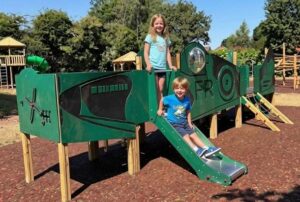
Green and black fleck wet pour, laid from 40mm to 70mm depth, provides the necessary safety surfacing beneath all equipment with recognised ‘fall height‘, while also providing smooth, accessible routes for wheelchair users. Across the rest of the playground, artificial grass provides a softer, more welcoming surface that supports ground-level play, whether that’s sitting, crawling, rolling around or simply spending time on the floor.
“Paths are just as important” reveals Tim, “they weave between the different pieces of play equipment and connect with the multiple entrances to the MUGA, creating clear routes through the playground making it easier for children with mobility needs to move independently between different areas, but also providing a sense of direction for all children”.
The Results: An Inclusive School Playground Designed To Support A Diverse Range Of Children's Play
The completed playground gives pupils at Lake House a varied outdoor environment with opportunities to move, climb, balance, explore, imagine and play alongside others. The design brings different types of play together, with opportunities for physical challenge, sensory exploration, imaginative play and social interaction in a single playground.
Just as importantly, it offers different levels of challenge and different ways to engage, working for all pupils across the school’s broad age range.
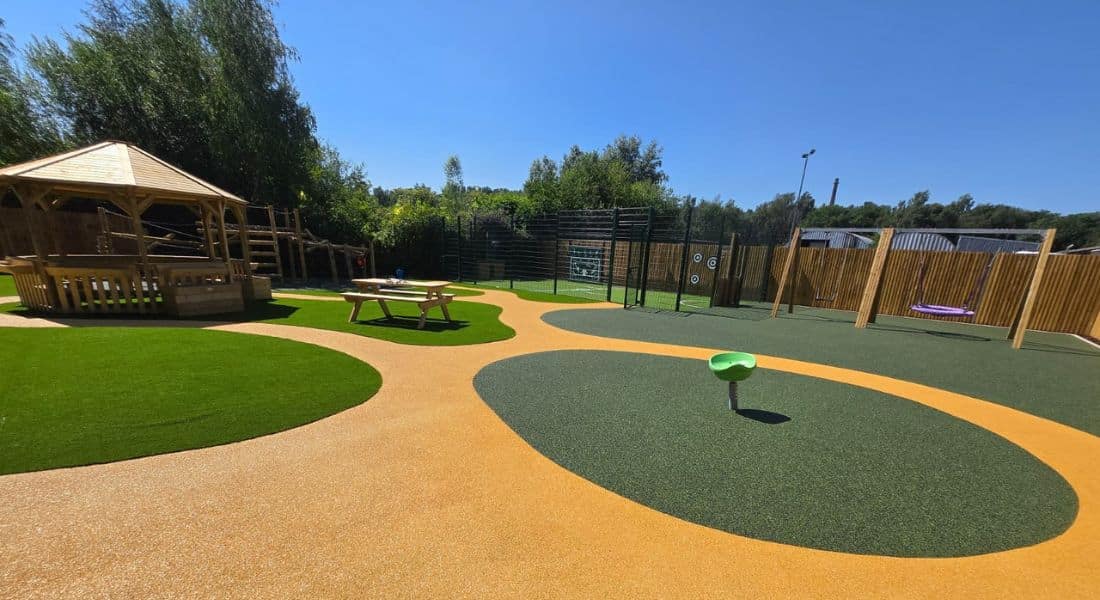
Children can choose how they participate, from more active and physically challenging play to activities that encourage exploration, interaction and concentration. “That variety is central to the design approach”, says Tim.
“Rather than creating a playground centred around one type of activity, the space offers different ways to play and different opportunities to engage, essential to an outdoor environment used by a diverse group of pupils”.
And the finished result has received an enthusiastic response from Blazing Stars Education. After visiting the completed play area, CEO Linda Simmons described it as “truly superb”, adding “I cannot wait for our children to use the play area!”
The quality of the delivery was also recognised by their Group Operations Director Theresa Hoy, who praised the installation as being to “an exceptional standard… a great deal of passion, commitment and pride throughout… with a real focus on getting everything right”.
Maintenance & Future Opportunities
The Lake House School playground is designed for long-term durability with low-maintenance, weather-resistant equipment that can withstand daily use from almost a hundred children. To make upkeep even easier, every installation comes with a comprehensive operations and maintenance manual, along with a range of aftercare packages from Creative Play – ensuring the play area remains safe, vibrant, and ready for years of fun.
Inspired By This Inclusive School Playground?
Explore more case studies to see the impact you can make – or contact Creative Play today for a free consultation! Get in touch with via email or telephone: [email protected] | 01244 375 627 – Explore more school case studies and related articles below.
Make Your Playground More Inclusive.
Discover Effective Playground Design
See Inside Our Playground Factory
The Importance of Sustainable Playground
Discover the Benefits of Inclusive Play
Find Inspiration From The Images Below