
Six Questions To Ask About Your Outdoor Space
Making a mainstream school playground more inclusive starts with understanding how the existing space already works for the children who use it. Inclusive school playground design goes beyond choosing accessible equipment – it considers routes, surfacing, the positioning of activities and opportunities to step away from busy play and any other factors that can affect how children with SEND access and experience outdoor play.
As schools review their inclusion provision, these six questions will help you assess your school playground’s accessibility and inclusivity, identify potential barriers and consider practical improvements for autistic pupils, children with ADHD, physical disabilities and other additional needs.
Drawing on more than 35 years of playground design experience, Creative Play‘s Outdoor Play Expert Andrea shares what to look for and how changes to the layout, activities and environment could help more pupils take part.
1. Can Children Move Comfortably Around The Playground?
Start with the routes between activities, not the equipment itself. Consider how easily children can move between different parts of the playground:
- Are routes wide enough and accessible?
- Do they pass through areas of fast-moving play?
- Are there pinch points where children regularly collide or queue?
These questions matter particularly for children with physical disabilities or mobility difficulties, but a well-connected playground benefits everyone.
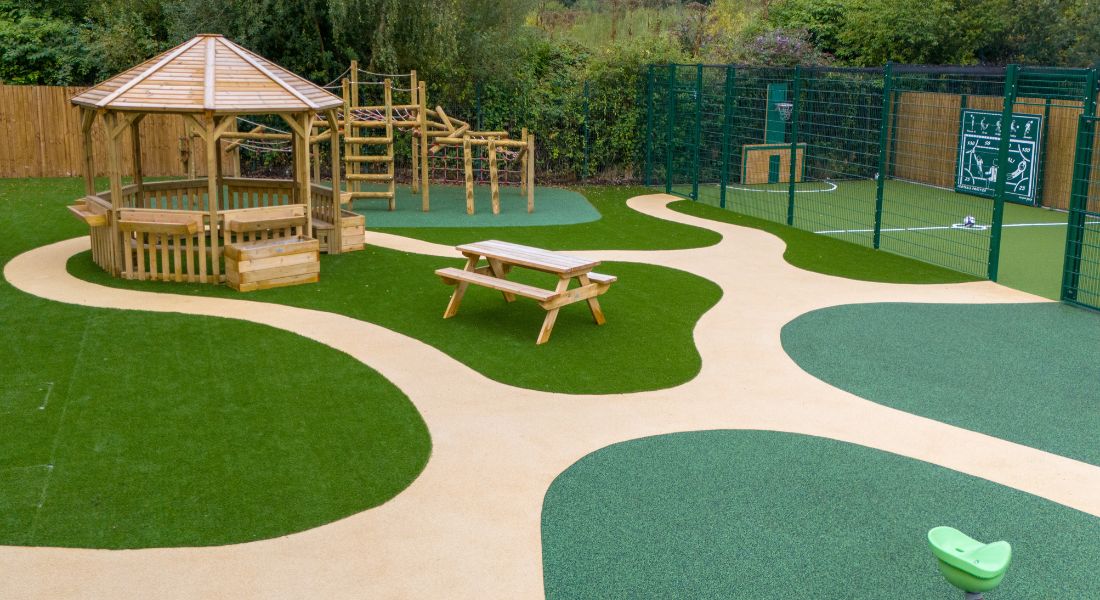
A child using a wheelchair, for example, should have access to a range of play opportunities alongside their peers, rather than an accessible route that leads only to one piece of equipment.
If routes are difficult to navigate, consider whether moving an obstacle, changing the route between activities or improving the surface could help. Check that children can reach the activities themselves, not just the areas around them.
“I often look at the paths before I look closely at the equipment. You can have a swing designed for inclusive use, for example, but if getting to it means crossing the busiest part of the playground, you’ve still got a barrier. The route is part of the inclusive design.”
– Andrea, Creative Play Outdoor Play Expert
Look For: Whether existing routes give children access to the playground as a whole, rather than just ‘designated’ pieces of equipment.
2. Where Can Children Regulate Stimulation?
Busy playgrounds can feel overwhelming for children who find high levels of noise, movement or social activity difficult to manage. Having somewhere to step back can help them regulate their experience without having to leave the playground altogether.
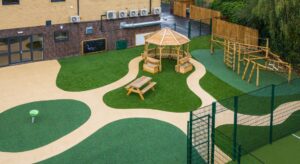
The position of a quieter area matters just as much as its availability. A sheltered space at the edge of an active zone can offer some distance from the noise while allowing children to see what’s happening around them. And a smaller-scale play area adjoining a larger one can provide a different setting for children who prefer a more contained environment.
Planters, changes in level and carefully positioned structures can help create these variations without completely separating one area from another.
If there’s nowhere suitable to step away from busy play, consider whether an underused corner or the edge of an existing play area could provide a quieter option. If a quieter space is already available but children rarely use it, look at whether it’s too exposed, too isolated or still affected by nearby activity.
“A quieter area doesn’t necessarily need to be hidden away. Sometimes children want to be away from the action but still see what’s going on. Positioning can make a real difference to how comfortable that space feels.”
– Andrea, Creative Play Outdoor Play Expert
Look For: Where children can go when the main playground becomes overwhelming, and whether those spaces offer enough separation from activity without leaving them isolated.
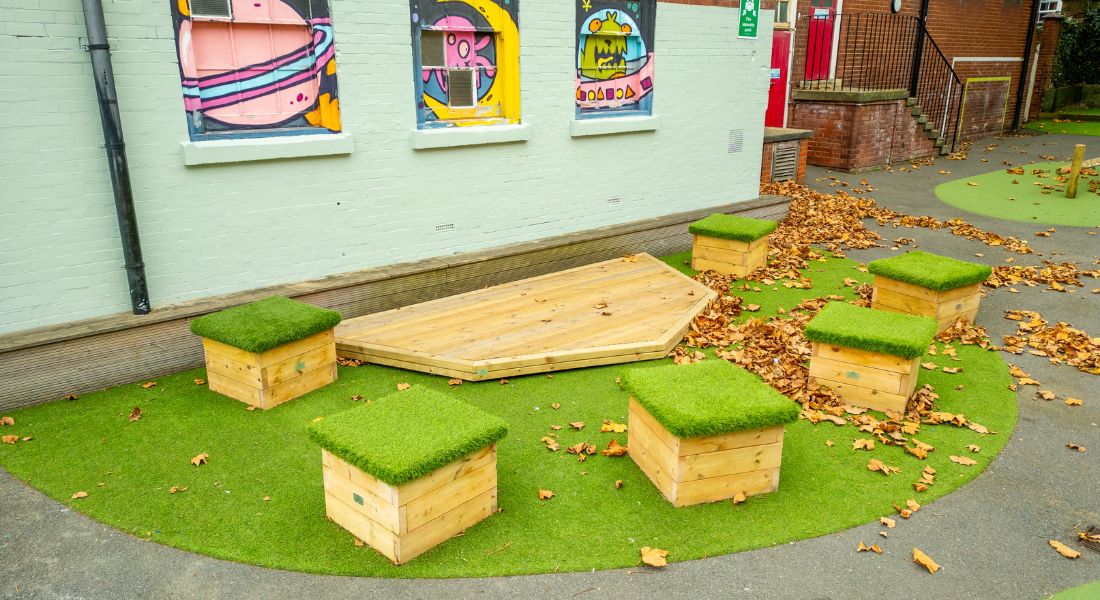
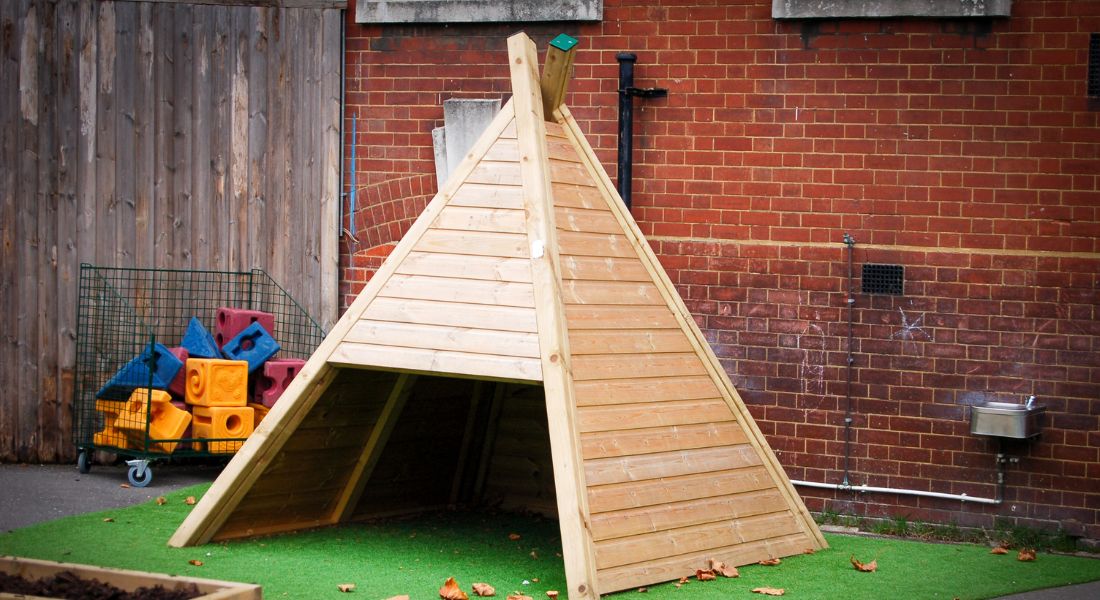
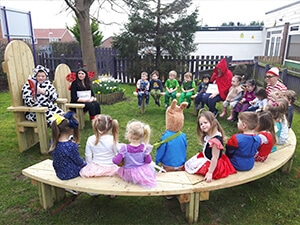
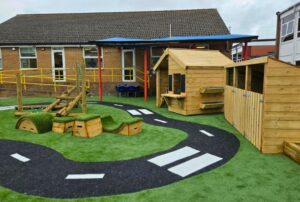
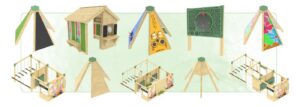
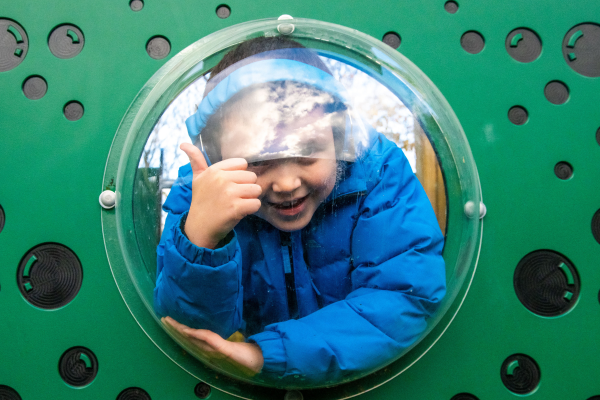
Stage areas can provide both quiet, expressive and social experience depending on how a child wants to play. Play dens and teepees offer a visual rest from playground excitement.
3. Can Children Control Their Sensory Experiences?
Children’s sensory preferences vary. A texture, sound or movement that one child seeks out may be uncomfortable for another. Good sensory design gives children meaningful choices about which experiences they engage with and how closely they approach them.
Look at the activities your playground provides and how they’re positioned:
- Is noisy, energetic equipment separated from activities that need a calmer setting?
- Can children approach sensory activities without being surrounded by competing stimulation?
- Is there a variety of experiences to explore, such as water, different textures, colours, movement and sound?
- Can children choose to engage with these experiences, or move away from them, without having to leave the wider play area?
For example, water play can offer valuable opportunities for sensory exploration, but its position matters. Keeping it separate from quieter activities can allow children to enjoy the experience without the associated noise, splashing or movement affecting everyone nearby.
If one activity dominates the sensory experience of an area, consider whether moving it or creating more distance from other activities would help. Where there is little variety, introducing features such as textured panels, interactive elements or opportunities for movement could broaden the experiences available. Think about how children approach and leave each activity, too, so that taking part remains a choice.
“It isn’t about trying to make every part of the playground suitable for every sensory preference, because that’s unrealistic. We’re giving children more control over which experiences they have and how close they want to be to them.”
– Andrea, Creative Play Outdoor Play Expert
Look For: Whether the playground offers a varied range of sensory experiences, with enough choice for children to find activities that suit their preferences.
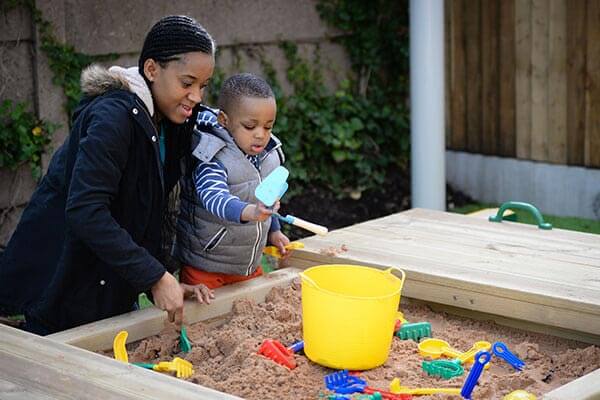
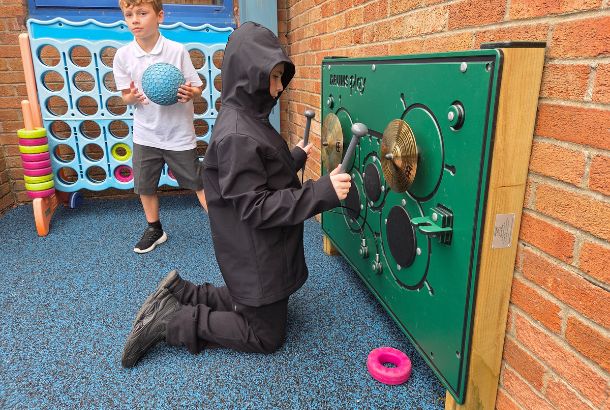
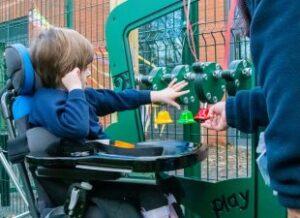
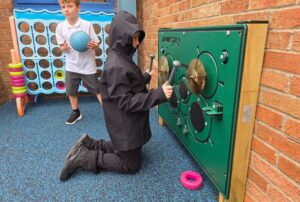
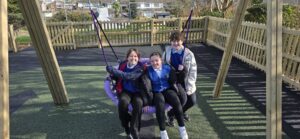
Sensory equipment allows individuals to play in a way best suited to them, but those experienced in SEND will know that some children react unwell to cetain stimuli.
4. Can Children Join In Without Having To Play The Same Way?
Inclusive playgrounds offer different ways to participate, whether through physical challenge, imaginative play, watching, talking or simply being alongside others.
Consider a climbing frame. One child might head straight for the most challenging route, while another uses the structure as the setting for an imaginative game. Someone else might stay close to a friend and join in from the ground without needing to climb.
The equipment is the same, but the opportunities it offers are different.
When reviewing your playground, consider:
- Can children join an activity gradually, rather than having to jump straight in?
- Can they participate without relying on spoken communication?
- Are there different levels of physical challenge?
- Can the equipment be used in more than one way?
Open-ended equipment can be particularly valuable because it allows children to bring their own ideas to play. Rather than encouraging a single activity, it can accommodate different interests, abilities and confidence levels.
If play equipment offers only one obvious way to take part, consider what could make it more accommodating. Ground-level features alongside a climbing structure, for example, can offer opportunities to play nearby for those who might struggle with climbing. Imaginative play features can also give children ways to join in that don’t depend on physical ability or spoken communication.
“I like equipment that doesn’t dictate exactly how it has to be used. You can see children finding their own ways to use it, whether they’re looking for a physical challenge, playing alongside someone else or creating their own game.”
– Andrea, Creative Play Outdoor Play Expert
Look For: Whether children can find their own way into an activity, including opportunities to participate without using equipment in its intended or most obvious way.


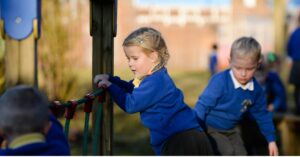
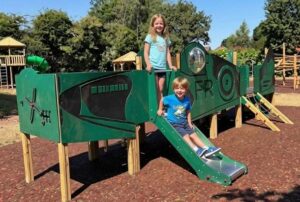
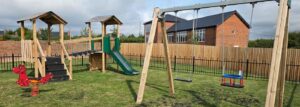
Inclusive climbing frames offer different ways to take part in the same play area. Children who don’t want or aren’t able to climb can still engage with ground-level features and play alongside their peers.
5. Can Children See What's Around Them?
Inclusive playgrounds offer different ways to participate, whether through physical challenge, imaginative play, watching, talking or simply being alongside others.
Consider a climbing frame. One child might head straight for the most challenging route, while another uses the structure as the setting for an imaginative game. Someone else might stay close to a friend and join in from the ground without needing to climb.
The equipment is the same, but the opportunities it offers are different.
When reviewing your playground, consider:
- Can children join an activity gradually, rather than having to jump straight in?
- Can they participate without relying on spoken communication?
- Are there different levels of physical challenge?
- Can the equipment be used in more than one way?
Open-ended equipment can be particularly valuable because it allows children to bring their own ideas to play. Rather than encouraging a single activity, it can accommodate different interests, abilities and confidence levels.
If play equipment offers only one obvious way to take part, consider what could make it more accommodating. Ground-level features alongside a climbing structure, for example, can offer opportunities to play nearby for those who might struggle with climbing. Imaginative play features can also give children ways to join in that don’t depend on physical ability or spoken communication.
“I like equipment that doesn’t dictate exactly how it has to be used. You can see children finding their own ways to use it, whether they’re looking for a physical challenge, playing alongside someone else or creating their own game.”
– Andrea, Creative Play Outdoor Play Expert
Look For: Whether children can find their own way into an activity, including opportunities to participate without using equipment in its intended or most obvious way.
6. Does The Playground Offer A Varied Range Of Play Experiences?
A playground needs a good balance of activities to appeal to different interests, abilities and ways of playing. Reviewing the overall mix can help identify where an additional type of play could broaden the opportunities available to children.
Consider what children can currently do in your playground. Is there a choice between active and imaginative play? Are there opportunities to explore, build, create, socialise or take on physical challenges? Does the space offer something for children whose interests differ from those of their peers?
Sometimes an existing activity can be adapted to offer more possibilities. In other cases, introducing a different type of play could fill a gap in the current provision.
Start by identifying what’s missing, rather than adding more of what’s already popular. If the playground has plenty of physical challenge but few opportunities for imaginative or social play, for example, a den or playhouse might broaden the options without requiring a complete redesign.
“When we’re assessing an existing playground, we don’t assume everything needs replacing. I’d want to understand which parts children already use successfully, where there are gaps, and whether we can build on what’s working. That gives us a much clearer starting point for deciding what changes would be worthwhile.”
– Andrea, Creative Play Outdoor Play Expert
Look For: Activities that are missing, underused spaces that could serve a new purpose, or existing equipment that could offer more varied ways to play.
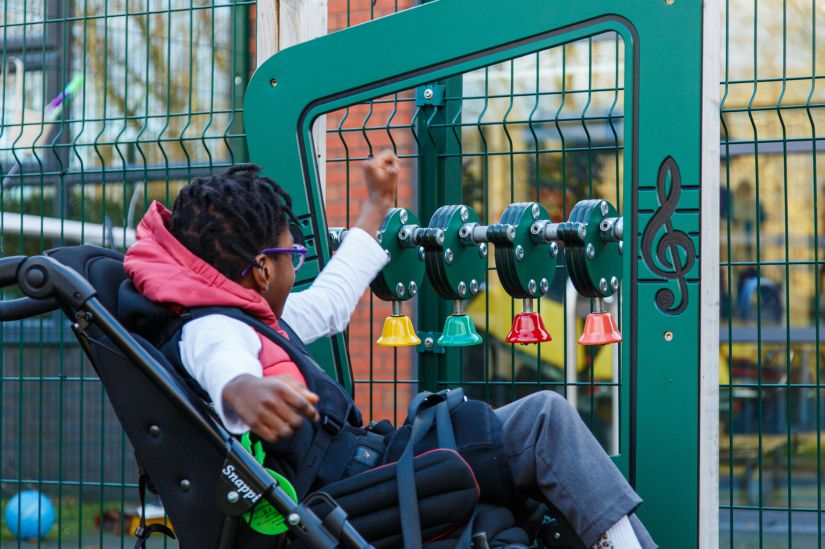
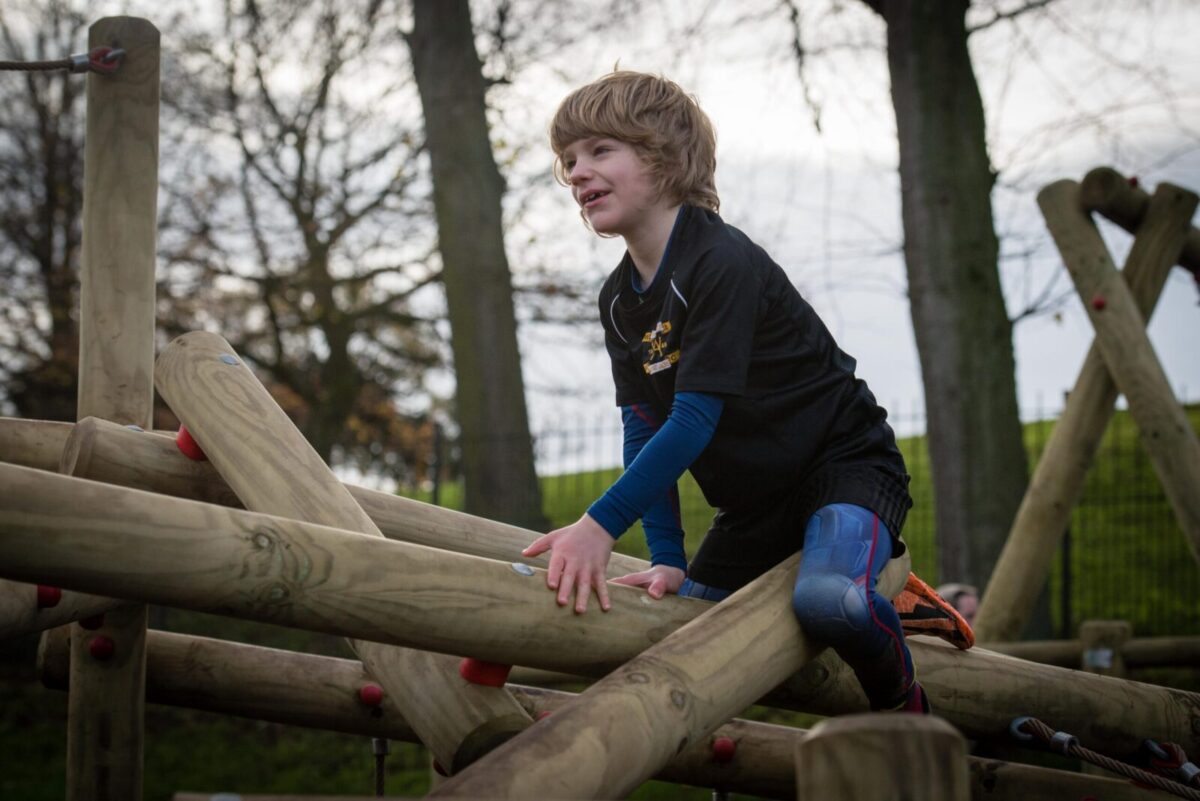
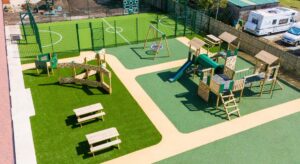
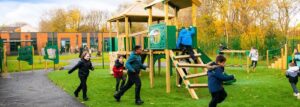
Jungle climber or bells? Different children play in different ways, and ALL of them should be able to find a thrill in the playground.
Practical Next Steps: Start With The Playground You Have
Before deciding what equipment to buy, spend time watching how children use the playground.
Where do they naturally gather? Which areas become congested? Which activities are avoided? Where do children go when they need a break? Are some pupils consistently watching from the edges rather than joining in? Does anyone regularly leave the playground because they can’t find somewhere that works for them?
These observations can reveal barriers that aren’t obvious from an equipment catalogue, whether that’s difficult routes, overwhelming activity or limited opportunities to join in.
Where possible, involve pupils in the review, including those who find the playground difficult to navigate or take part in. Ask what they enjoy, what they avoid and what would make spending time outdoors easier. Staff observations can help identify patterns, but children’s own experiences may reveal barriers that would otherwise be missed.
Then consider which changes are practical within your available space and budget, and prioritise those that address the barriers you’ve identified.
The aim isn’t to make every child play in the same way – it’s to create an outdoor environment where more children can move around, make choices and find ways to participate alongside their peers.
The observations you make can help identify where changes to your outdoor space could make the biggest difference. If you’re reviewing your school’s inclusion provision, Creative Play can help you explore practical ways to make your playground work better for more pupils.
Explore our complete playground consultation, design and installation service to find out how a no-obligation site assessment, 3D designs and an itemised quote can help you plan your next steps.